
Meet The Actor Playing Young Washington
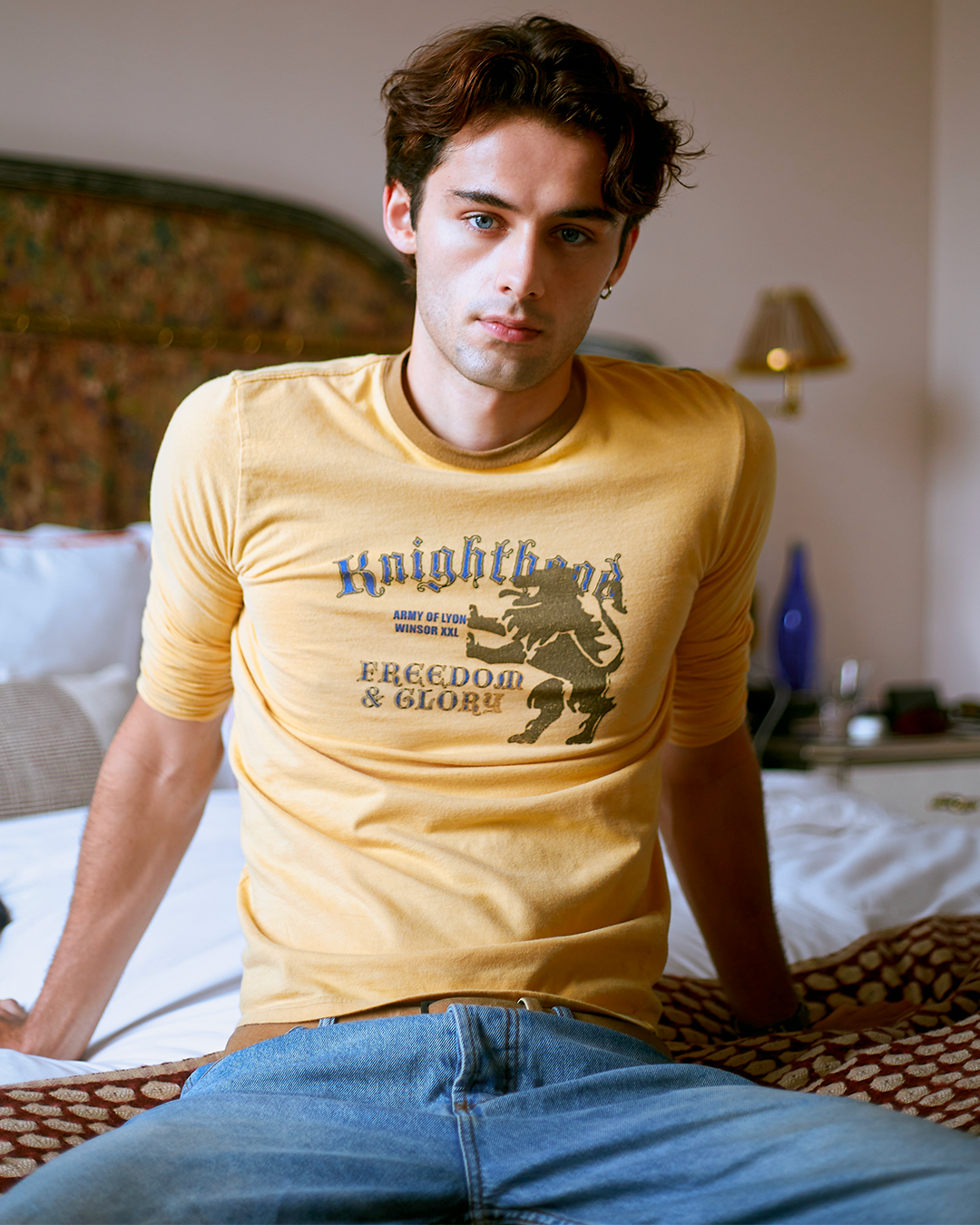
top: Vintage, Jeans: William’s own
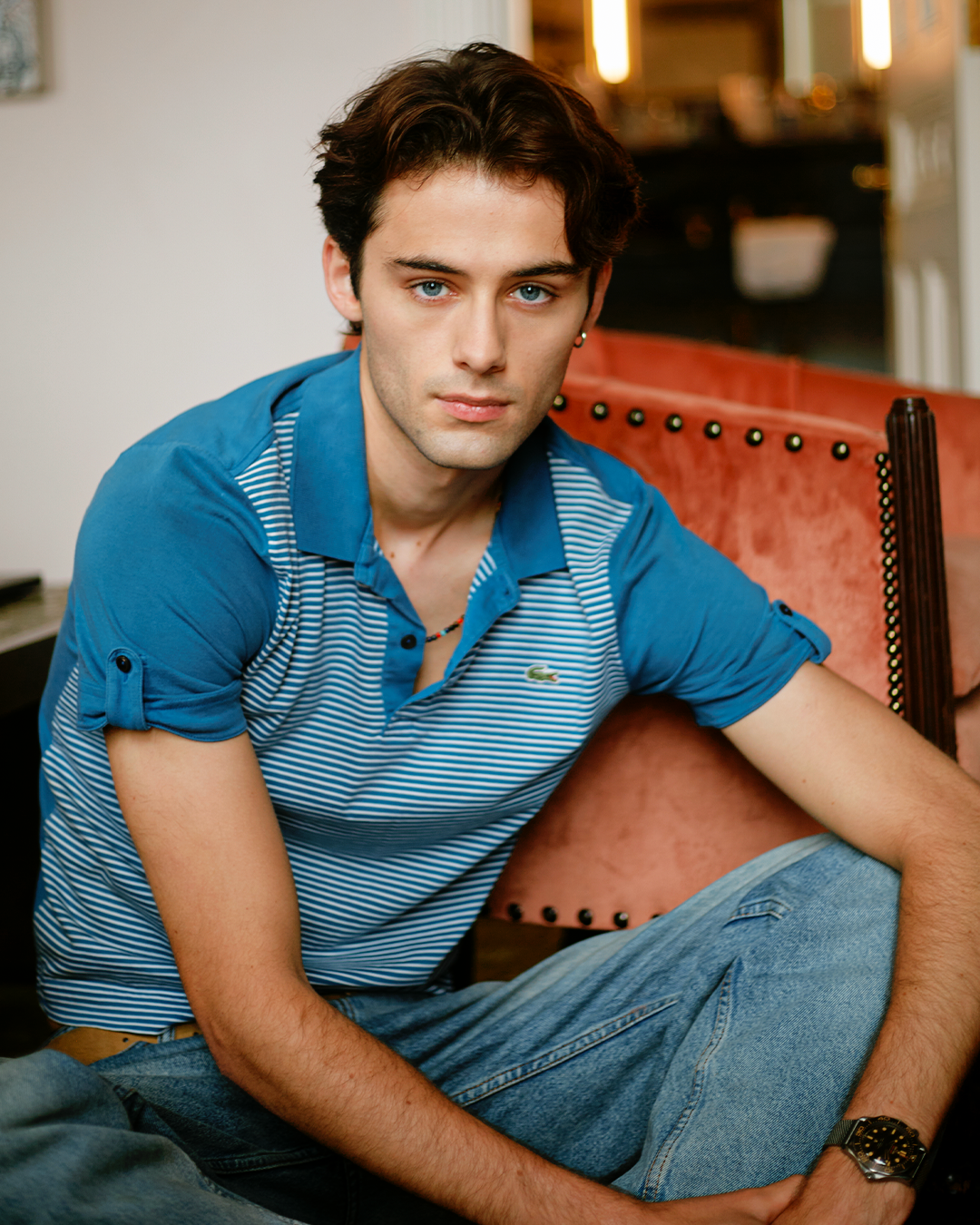
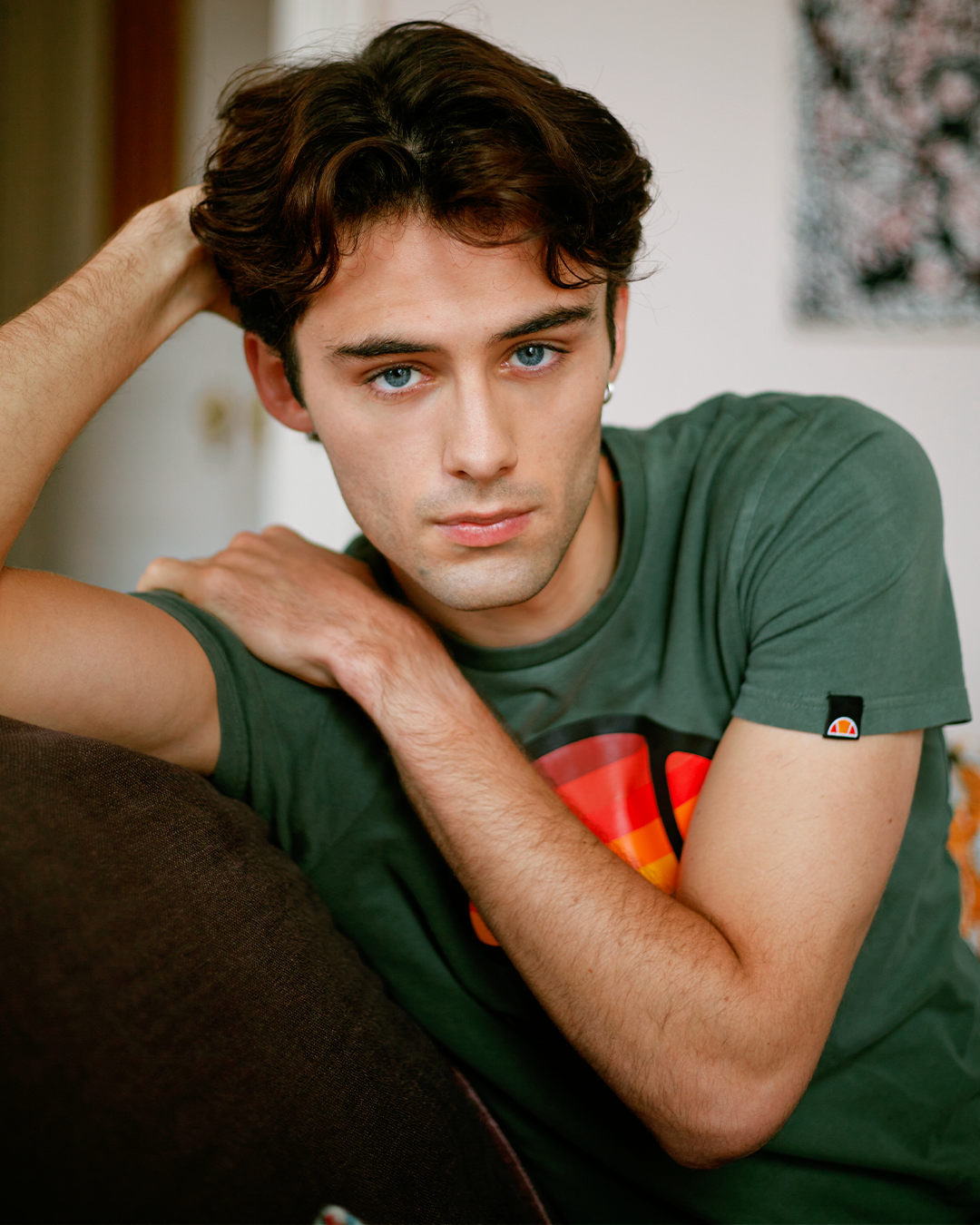
William Franklyn-Miller had to learn how to lead a film while playing a man still learning how to lead himself.
Words & Photography by Dio Anthony,Grooming by Erin Anderson with Exclusive Artists using Patchology
B efore George Washington became a name carved into the mythology of America, he was a young man trying to get somewhere. He was ambitious, uncertain, hungry for status, and still learning how to carry the weight of who he might become. In Young Washington, William Franklyn-Miller steps into that space before the monuments. Playing the kid underneath the icon.
For Franklyn-Miller, who at 21 years old, had never led a film of this scale before, the process became its own kind of coming-of-age story: learning the lines, surviving the mud, trusting himself, and discovering what it means to grow up on camera while playing one of the most orbited names in history.
American Studies: What’s one question you wish people would ask you more often?
William Franklyn Miller: I guess what goes on in the background of acting. I feel like the role is really just the beginning. I think there’s so much that I don’t really hear from actors: the backstory behind how many failures they went through before they got their first role.
Because I’ve done, like, 400 auditions minimum. Honestly, it was probably nearing a thousand at this age, you know, since I was 12 years old. And at most, maybe there were four yeses, and then two of those projects probably got canceled or something. I can’t remember.
But I think there’s so much buildup that comes with acting that nobody really talks about. And it’s what you learn from each audition. I think that’s an interesting question. That’s something I really want to ask other actors as well.
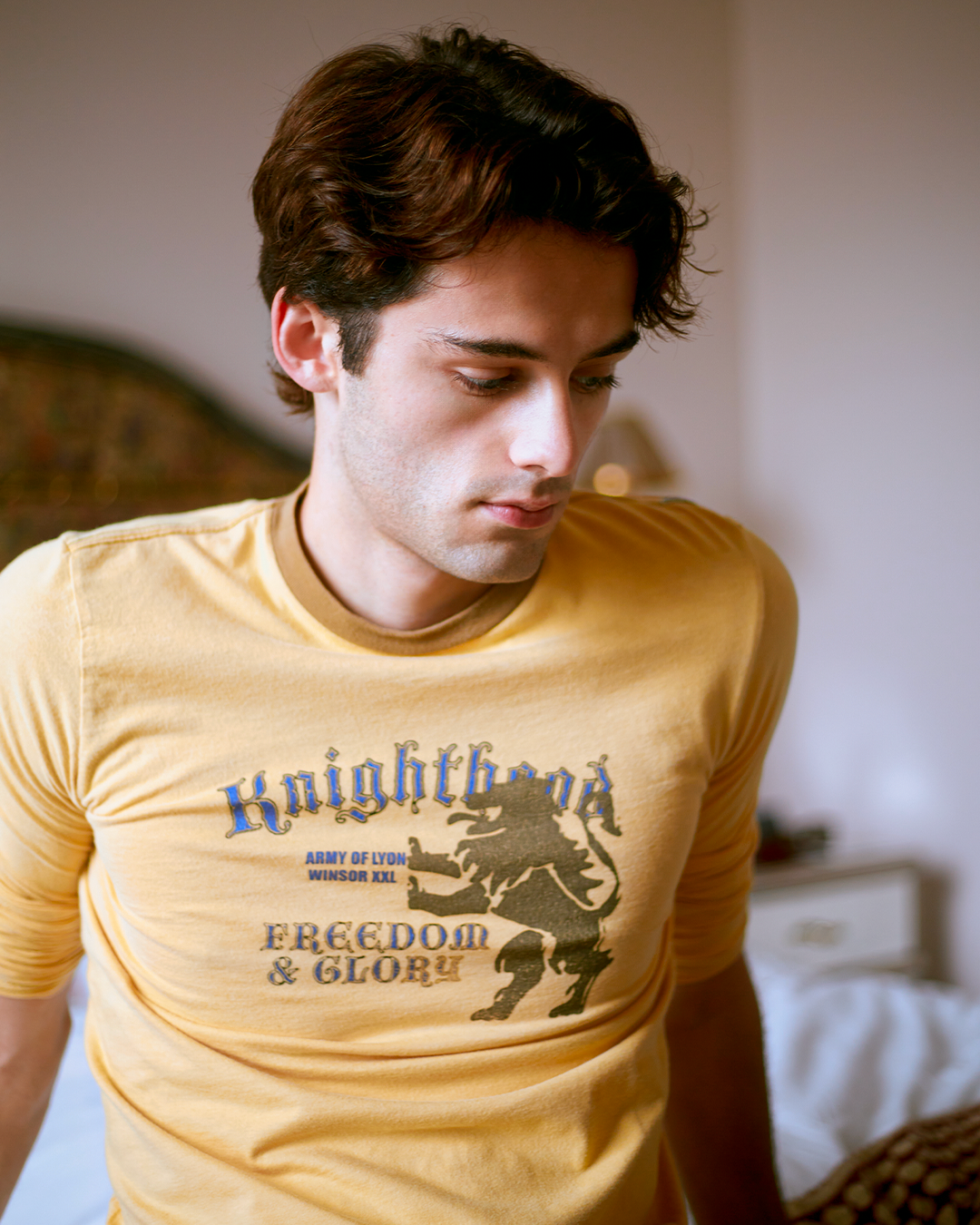
top: Vintage
American Studies: If someone watched your life right now as a film, what would they think it’s about?
William Franklyn-Miller: God, What would they think it’s about? I reckon they’d have no clue. But I think it’s about me trying to do what I love, I suppose, and the levels I’m reaching to get there.
American Studies: What’s something from your childhood that still quietly shapes how you move through the world?
William Franklyn-Miller: Ooh. So from my childhood, I guess it’s just the way my mom raised me, I think. She was always a role model for me, obviously, personally in my life. So I’d say just the way she shaped me, and I suppose being humble, keeping her head down, working hard, and not giving up, I guess.
American Studies: Is there a piece of media, whether a show or a song, that feels like it kind of raised you a little?
William Franklyn-Miller: Ooh. Yeah. God, that’s a good question. It’s interesting. I didn’t really watch shows growing up, or just media in general. I’m trying to think. God, off the top of my head, I’m not sure.
I watched The Simpsons all the time with my pop when I was younger in Australia, and I loved that. I don’t know if that shaped me, so to speak. I don’t know if I could say that, but that was something I always think about. It’s who you really spend your younger years watching television with that I think are the most memorable things.
American Studies: Is there a small decision you made that ended up quietly changing, like, the course of your life?
William Franklyn-Miller: God, not really on my behalf, but it was probably my mom and dad when I was younger. We moved countries so often, you know. I was born in Devon, in England, and then moved to Australia, moved back to England, Australia, then to Qatar, Australia, Ireland, then back to England.
So I’ve moved like seven or eight different times throughout my life, and I think that’s really shaped me as a person.
American Studies: What was the hardest part about that?
William Franklyn-Miller: Definitely fitting in. I didn’t fit in, in most schools I went to when I was younger, mainly because everybody else had friends that they’d known for, like, four years. And so, for me, being this new kid who had a different accent, was from somewhere else, and didn’t really get the banter at the time, it was a struggle for me, for sure.
But I think, in a sense, I’ve always been acting, which is something I was talking about the other day. It’s like, when you move schools, for the first few months you are acting because you’re trying to fit in. You’re trying to find out what’s funny and what people find interesting.
And that, from Australia to Ireland, differed hugely. What people were talking about in Australia was not what they were talking about in Ireland. So, in a way, it subconsciously has benefited me in the acting world, I guess.
American Studies: Kids are brutal, too.
William Franklyn-Miller: They are. They are. They’re tough. They are tough.
American Studies: The younger, the more brutal. .
William Franklyn-Miller: A hundred percent.
American Studies: Do you like being interviewed?
William Franklyn-Miller: Yes. I like it. I like coming up with answers. It really puts me on the spot sometimes. And sometimes I just yap on. But that’s the, I suppose that’s the benefits of cutting stuff. .
American Studies: What do you feel is more embarrassing? Watching yourself on screen or listening to yourself talk sometimes?
William Franklyn-Miller: Listening to myself talk sometimes, honestly. I think on screen, somebody writes it for you, and so whatever you say can’t be embarrassing. Maybe the way you act it, you don’t think is good. But no, listening to myself speak sometimes. Probably when I’m listening to this, to be honest.
American Studies: Do you like your name? It feels like something out of a period drama.
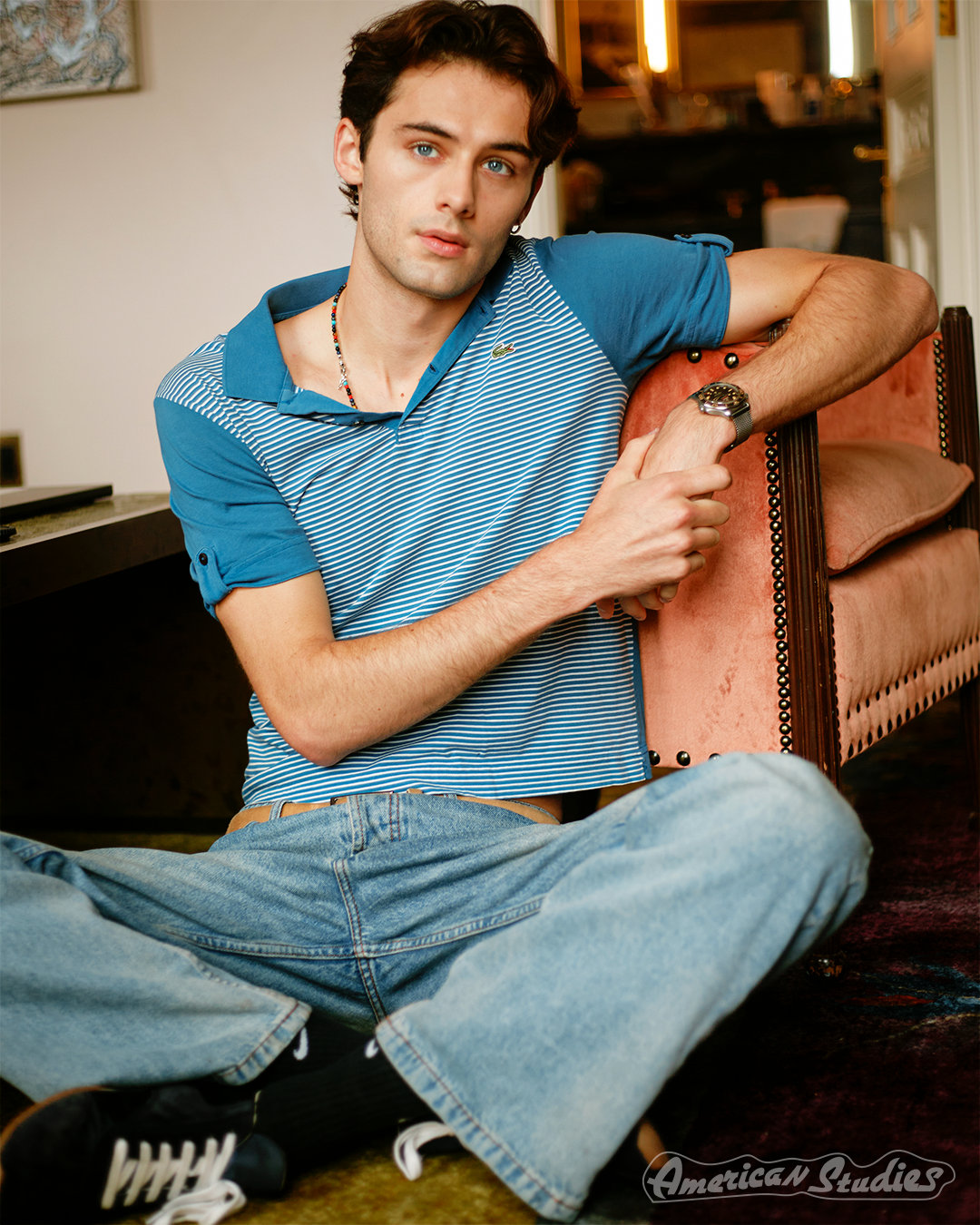
William Franklyn-Miller: I do. It’s crazy. I really do like it. It does sound a bit pretentious sometimes, actually, especially with the English accent. But it’s a weird one. Franklin’s from my mom’s side. Miller was my dad’s side, and so they just merged them together when they got married years ago.
And so, yeah, it is a cool name, but it does sound quite presidential to some.
American Studies: What kind of child were you?
William Franklyn-Miller: I was honestly way too good. I was just so chill. I don’t remember being a ratbag at all.
I mean, I remember my brother and sister were born. They’re twins. They’re younger than me. They’re both 19. I think they were a little worse than me, to be honest.
American Studies: What’s it like having twins as siblings?

William Franklyn Miller: Amazing. Honestly, growing up with them has been the best. It’s like having two best friends. They share sort of the same features in a way, just in a boy and girl sort of way. It’s always been great. And the age difference isn’t that much. They're the best.
American Studies: what’s something you’ve learned about yourself during this whole process?
William Franklyn-Miller: I think it’s like rising up to the occasion. I think two years ago today, I would never have thought I could ever lead a film or be a part of a film at this huge of a budget.
Before I even filmed a scene, my biggest worry was learning the lines. My whole life I’ve been learning lines, but there’ve always been, like, one scene for an audition, or when I booked a TV series, there’s maybe three scenes max, but never, you know, 60, 70 scenes in a film. And so that was my biggest worry.
But then I quickly, very quickly, realized my biggest worry was doing the best I could in every scene possible, because every single one of those is going on a big screen and it’s going to be immortalized. But it’s really rising to the occasion that I learned, and trusting in yourself, really.
American Studies: And with that in mind, what was it like processing the fact that you were going to play this character? I mean, everybody knows who this person is. If you don’t know many presidential names in America, you know that one.
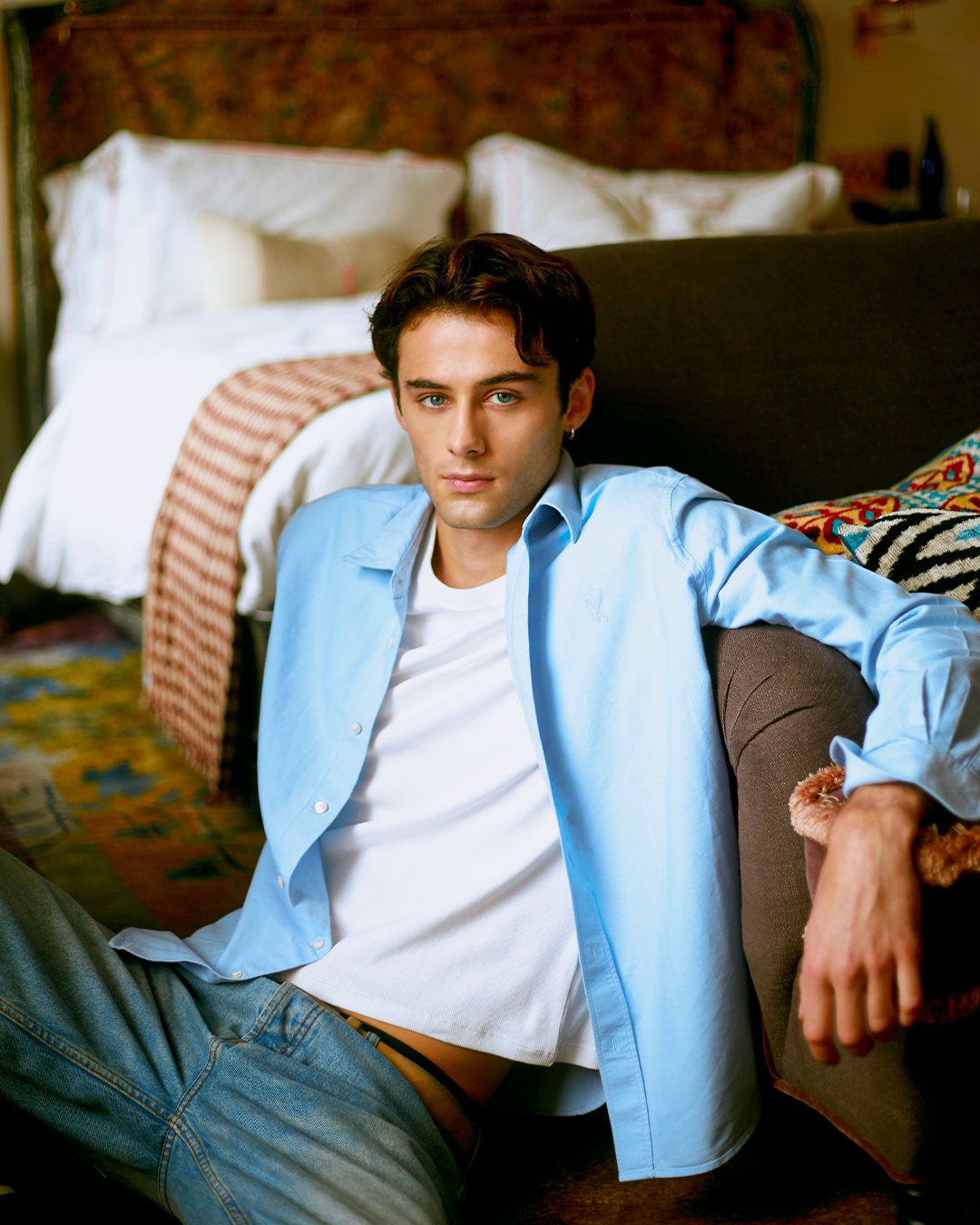
William Franklyn-Miller: I know. It’s mental. It was definitely a shock at first. And then the reality sort of kicked in at how much responsibility it was.
But also, I think the fact that it’s young Washington gave me a little bit of ownership over the character, in a sense, that I could bring a little bit more creativity to it than somebody that was doing an old Washington could. Because obviously, by then, he’s got the stature, he’s got the confidence, he’s got everything behind him. Whereas in a younger Washington, I think it’s the birth of his ambition, and I could really show that.
At the end of the day, he’s a 21-year-old kid, so he makes mistakes. He does screw up. And you see that through the film. I think that’s the fun that I could bring in, because I was 21 at the age of filming. I think there’s less of a requirement to honor him, in a sense. Yet showing the birth of that ambition.
American Studies: Something I just thought of, and I’m curious about, is where the source material came from. How do we actually know these things?
William Franklyn-Miller: Yeah. It’s a good point. Everything’s documented, although not as much as later in his life, obviously. He wrote a lot about surveying the land, and that’s in the film. And then all these historical moments are obviously written about, not just by George, but by other people as well.
Really, when it comes to his character, though, I just studied everything in his older years and then sort of unraveled, I guess, and thought about where that ambition could have come from. Who did it come from?
Lawrence, his half-brother, was a massive inspiration for him. He was the commander of the militia at the time when George was young, and so he always inspired him.
Another thing about George, and it’s written throughout the history books, is that he was obsessed with status. And so, throughout this film, you’ll see that as well, where he just isn’t quite there. He grew up in definitely a wealthy family, but it wasn’t the wealth that could get you into those rooms. And so he was sort of middle class in that sense. He was always there, but couldn’t quite get his foot in the door.
And I think this film shows that, and the struggle with class as well. There’s a relationship throughout the film where they can’t quite get together because of that division, I guess.
But yeah, most of the research really was from accounts he wrote, and then there’s a book as well called The 100 Rules of Civility and Decent Behavior, which was really George’s stature from a young age. And so I studied that, and that was always in my mind throughout every scene.
American Studies: Is there a note the director gave you that you always remember? I’m always curious about those kinds of in-between-scenes moments
William Franklyn-Miller: “Pain is temporary, but film is forever,” was one he gave to me. Which is a really, really good one. John Owen. And that one I hadn’t heard before, but it’s true. There were some scenes that were really tough, obviously. It was a dream regardless, so I’m not complaining, but the Fort Necessity scene was really tough. You were there. We were supposed to do it in three days, and it ended up being four or five days in the mud, rain machines going off, heavy muskets, running around 30 kilos heavier than he usually would be. So that was tough.
But yeah, he used to say that all the time, and we’d all laugh about it, but it was true: “Pain is temporary, but film is forever.”
American Studies: What do you think he meant by that exactly? I have my own understanding of it, but I’m curious how you perceived it.
William Franklyn-Miller: I think it’s up for interpretation, really. But I think “pain is temporary” is just like, if you’re struggling with this scene, push through it, because you’re not going to be feeling that pain forever. Eventually, that’s going to be on film, and it’s forever.
But maybe it also means pushing through the pain and showing the pain, because that will show on screen, too. You’re not going to experience that forever either. So there are multiple ways to look at it.
American Studies: Yeah. I love that quote. I’m actually obsessed with it, because I feel the same way. You watch old films, and they’re time capsules of the people in them.
William Franklyn-Miller: Yes, exactly.
American Studies: You know, it’s a story, but it’s also a record of the people in it. How they looked, who they were at that moment. I mean, even if you film a movie a year ago, you’re already different the next year. Having that almost live photo of someone is really special.
William Franklyn-Miller: It’s so true. It’s so true. And for me, I was growing up on set as well. I was figuring everything out, how to lead a film, really, which is really, really tough, but also such an honor.
But looking back on it now, it was like, God, I really didn’t think I could do it back then. And now I look at it and I’m like, well, I did it. It’s so cool. So cool for me.
This interview has been edited and condensed