
It’s a Good Time To Be Michael Johnston
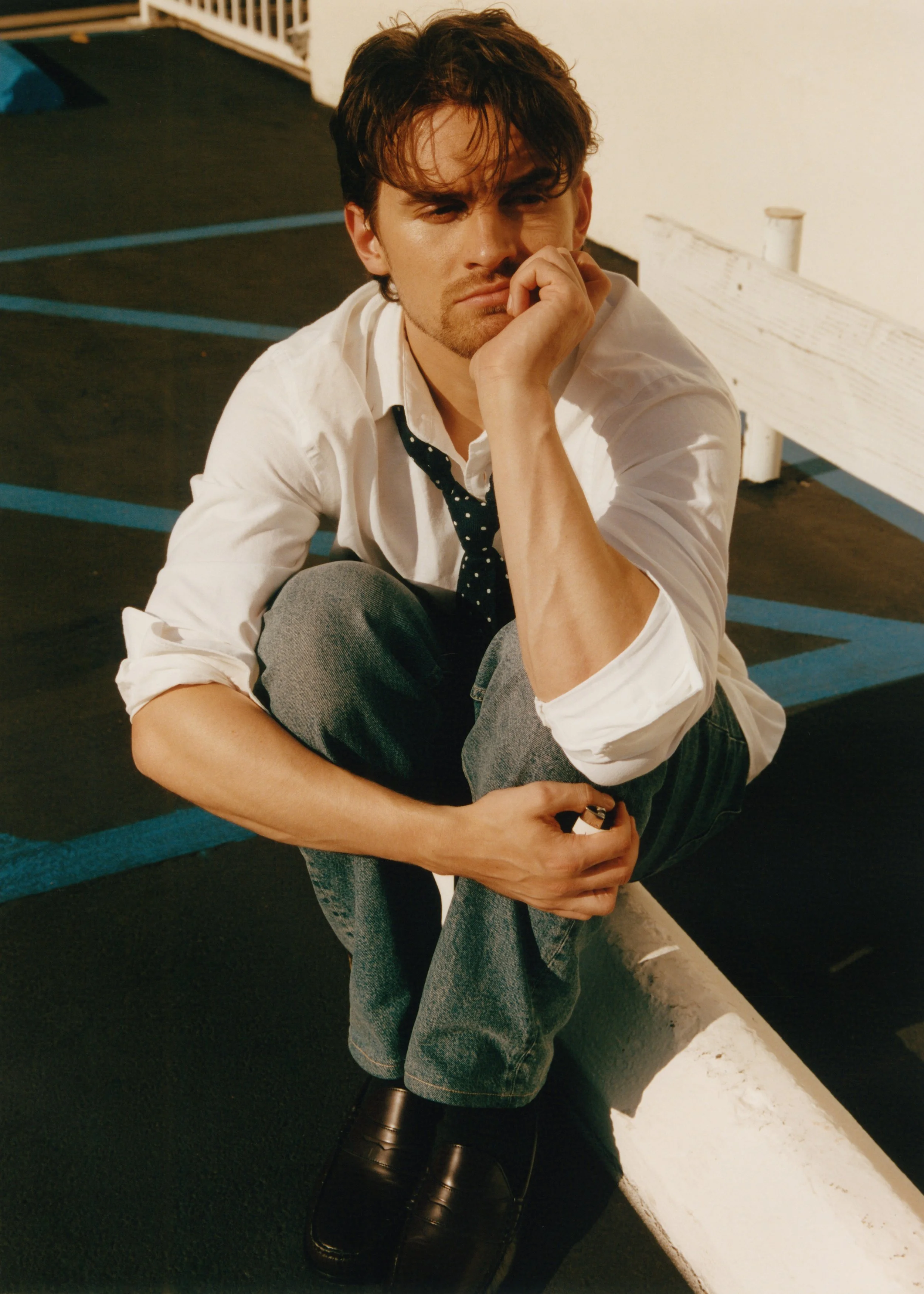
Michael Johnston on the quiet choices behind a very loud cultural moment.
Words by Dio Anthony, Photography by Alex Justice Styling by Shameelah Hicks Grooming by Lucy Gargiulo Videography by Gian Barbarona
B y his own admission, Michael Johnston is an actor’s actor. He does his homework, dives deep into the work, and finds the truth behind the words. The ones written into the script and the ones his characters actually mean, despite never having said them at all. With ‘obsession’, his process as a performer enters new territory—tackling the anti-hero.
As of this writing, on June 1, 'Obsession' has become one of the year’s most improbable and profitable box-office successes. Made for less than $1 million, Curry Barker’s debut theatrical feature has grossed more than $100 million in the United States and an obsessive $148 million worldwide.
There is talk of a new age for Hollywood, ushered in by this kind of victory. A small, original horror film, made with conviction and without the machinery of a franchise behind it. It is an all-out cultural moment, and 30-year-old Michael Johnston, along with his co-star and director, are at the center of it.
For American Studies, he reflects on the freedom that allowed such a performance, the alternate versions of Bear’s story, the technicality of horror, and the magic that surrounds his life in this very moment. It’s a good time to be Michael Johnston.
American Studies: Thank you for making time. I'm really excited to talk. Disclaimer, I spent about two hours talking about the film with my friends earlier this morning. So I have some heady questions for you.
Michael Johnston: Please, bring it. This press tour's been so crazy. I'm primed right now and ready to talk.
American Studies: I’m really worked up to be honest.
Michael Johnston:[Laughs]
American Studies: For starters, I think we should normalize the name Bear. It’s iconic.
Michael Johnston: I'm seeing some serious hate for the name Bear [Laughs].
American Studies: Really?
Michael Johnston: I saw a comment and it was like– what F’ing guy's name is Bear? Just delete the contact from your phone. I'm like, what's wrong with the name Bear? Who names their son Bear? Stuff like that. The full name is Baron though.
American Studies: It’s great. I think, for women, Baron can be a terrifying person on paper because he doesn’t enter the movie as some obvious monster, right? We see him lonely. He’s a little awkward. He’s obviously a hopeless romantic, and also very sweet. I’m wondering, when you were building him, were you actively thinking about how you would draw the line between the tenderness and the entitlement that we start to see?
Michael Johnston: Well, that’s a great question. You know, I do think it was a balancing act, but I will say, this is what I loved about the script and my character when I read it in the first place: Bear is truly not black or white. Nor is the movie. You know, it lives in this whole moral gray zone.
And the way I approached Bear was that he can be fully, completely kind and sweet and tender in his demeanor, but still be capable of making decisions that can really hurt other people.
A few things to really kind of point out about Bear: he was at a really vulnerable place when he made the wish. He didn’t know that the wish was going to come true, you know? So I almost feel like you can’t blame him for just saying something.
American Studies: Exactly. I was upset and frustrated with him, but it wasn’t as easy as simply blaming him. I thought that was really interesting.
“Bear carries the weight of the morals for the story. Inde carries the horror.””
Michael Johnston: We’ve all been in an emotional place and just, like, said something to ourselves. His words on the Willow were pretty much as significant as a thought we would have in our own mind, right? But then the decisions he makes later become a lot more significant, of course.
I think he sort of dug himself into a hole, and he was so deep in that hole. The entire time, he’s so focused on getting the girl of his dreams that I think he would just sort of look up and say, “Yeah, I can’t get out of this. I’m just gonna keep going with the easy decisions that are selfish.”
And I love the question that brings up for an audience: Does that make him evil? Or how evil does that make him? It’s really going to be up to the interpretation of the viewer. People are going to have different experiences and project them onto this. Some people are going to come out of it hating him, and some people are going to come out of it being like, “Well, he made some really awful decisions, but we were still rooting for him.”
Which I love. That was a great challenge.
American Studies: Yes, totally. I love the way you describe it as this almost passing thought he has. He makes the wish, breaks the Willow, and doesn’t really understand the weight of what he’s done until his whole world starts to spiral.
And I also think there’s something interesting in what the film is saying about vulnerability. At the beginning, Bear is actually trying to be honest. He’s saying, “This is how I feel.” But his friend immediately shuts that down and tells him that approach isn’t going to work, that he needs to do something differently.
I’m curious whether you saw part of Bear’s journey as an avoidance of vulnerability? Instead of continuing to be honest and risking rejection, he starts making these choices that allow him to sidestep that discomfort entirely. Do you think that lack of emotional space is part of what makes him so susceptible to the wish in the first place?
Michael Johnston: Yeah, absolutely. I think that’s a huge part of it. He doesn’t really know how to sit in those feelings, and the people around him don’t necessarily give him the space to, either.
American Studies: Right, it extends directly to his friendships. There doesn’t seem to be much space for Bear to be vulnerable with the people around him. We see him at home crying over the death of his cat, and at first, it just feels like he’s someone going through a difficult time. There’s anxiety there, maybe some depression. And then he’s also trying to figure out how to tell this girl how he feels about her.
But instead of having the space to say, “Hey, this is what I’m going through,” or, “This is how I feel,” Ian practically pushes him away from that kind of honesty.
Michael Johnston: He does. He absolutely does. He was secretly hooking up with Nicki.
American Studies: Exactly. And we don’t know that until later. When it’s revealed, you’re like, “Oh, now I understand the motivation behind that.” Because it’s the same thing: he wasn’t being completely honest or vulnerable either. He could have just said, “Hey, maybe don’t do this. We’ve been sleeping together, and I don’t think she sees you that way.”
But instead, he’s protecting himself. And that decision ends up contributing to this unraveling of the whole world around them. I find that really interesting, because I’m not sure everyone will immediately pick up on the vulnerability aspect of the story. But I think that’s part of what gives the movie so many layers.
Michael Johnston: There really are. When I was working on the movie, I was so hyper-focused on Bear, his experience, and his point of view. But as I’ve watched it a few times, I’ve started picking up on all these other layers, too.
I mean, first of all, let’s just say it: these friends are garbage. And what you’re saying is true. Other than Sarah, played by Megan Lawless, who probably has the strongest moral compass of the group, everyone is withholding something from one another. Sarah thinks Nikki is taking advantage of Bear. Her perspective is wrong, but I can completely understand why she sees it that way.
And with Bear, I think the reason it’s so difficult for him to express his feelings is exactly what you said. He’s probably dealing with depression. If you pay close attention at the beginning, you might catch that he inherited his grandmother’s house, which suggests that she recently passed away. There’s no mention of his parents, so who knows what’s going on there. And then, on top of all that, he’s pining over this girl.
“Does that make him evil? Or how evil does that make him?
”
American Studies: No mention of his cat either.
Michael Johnston: Right. You see him actively avoiding it. He tries to tell his friends. He tells Sarah, and then he’s just like, “It’s fine.” And after that, he doesn’t really cry about it again.
So, yeah, he’s someone who avoids his feelings on a regular basis. He has this tunnel vision, this belief that getting the girl of his dreams is somehow going to fix everything.
And that’s what I love about the film, because I can relate to that. There are lessons I learned in my earlier dating experiences that I could see reflected in Bear. I think that’s part of why the movie feels so relevant, and why so many people, especially younger people, are connecting with it. Which I think is just awesome.
American Studies: It’s super cool. It was really interesting to watch it in a theater with other women, because there’s one scene in particular where Nikki is speaking from this almost Sunken Place-type state—
Michael Johnston: Yeah, exactly.
American Studies: She’s essentially saying, “This isn’t going to end well. Just kill me now.”
Michael Johnston: Are you talking about the scene in the bedroom, where she’s sleeping, but she’s—
American Studies: Sleeping, but still speaking to him. It’s her before she wakes up. She’s pleading with him, and his reaction is something along the lines of, “Is it really that bad?”
Michael Johnston: “To be with me? What would be so bad?” Yeah.
American Studies: “What would be so bad?” And I saw that moment differently. To me, I was like, “Of course you would ask that.” It’s sad. But the women in the theater were really thrown off by it. They were almost annoyed.
I’m wondering if that was something you spoke about, or what you think it says about Bear. The worst hasn’t happened yet, but enough has happened for him to know that something isn’t right. And still, what he takes away from her pleading is, “Would it really be that bad to be with me?”
“There are lessons I learned in my earlier dating experiences that I could see reflected in Bear”
Michael Johnston: Yeah. It’s really dark. We talked a lot about that scene. There are so many levels you could dive into. You could chalk it up to Bear being so ignorant and hyper-focused on what he desires. He got a taste of it, and now he might lose it. So maybe it’s just that, and he isn’t thinking about her at all.
Or maybe there is some part of him that understands what’s happening to her, which is even worse, because he doesn’t care that she’s going through this kind of Sunken Place torture. There are so many different levels of intensity to how awful that moment could be. When we were filming, I wanted to talk about it a lot. I wanted to know exactly what it was.
But ultimately, the take we went with was one where I threw everything else away and returned to my main strategy for Bear: focusing on what he wants most and not losing it. That’s pretty much what you see there.
Personally, I don’t think Bear spent any time wondering where the real Nikki was, or whether she was okay. Just like everything else in his life, he’s avoiding that, too, because it’s painful. I do think he cares for his friend. But, you know, human nature. We’re capable of terrible things.
And I completely understand why women, in particular, would be annoyed by that scene. It’s dark. It’s a really dark look at the reality of projecting our feelings onto other people and seeing them as objects. It’s almost the darkest possible version of that.
American Studies: I love that thought. My natural follow-up is: did the wish have to be so intense? He doesn’t just wish that Nikki liked him, or that she thought he was attractive. He says, “I wish Nikki loved me more than anyone in the world.”
Obviously, for the nature of the movie, the consequences had to be extreme. But his wish didn’t necessarily have to be phrased that way. There could have been room for disappointment, on his end or hers. Instead, he wants to be loved more than anyone else in the world. What do you think that specificity says about Bear’s mentality? Was that something you and Curry spoke about?
Michael Johnston: Yes. That was very intentional. And first of all, what a brilliant question. I would’ve loved to have been a fly on the wall for the conversation you had with your friends about it.
American Studies: It was a full podcast.
Michael Johnston: Right? You did a podcast. But I love that question. It’s honestly one of my favorite questions I’ve been asked, because I know you were paying attention.
Something Curry told me, that I think is really interesting is that the One Wish Willow isn’t inherently evil. The movie’s marketing is “Be careful who you wish for,” but it’s also literally a story about being careful what you wish for, and how you word it. The Willow simply gives you an interpretation of your wish.
And Bear’s exact words are, “I wish Nikki Freeman loved me more than anyone in the world.” So all of her emotions are at level ten. If you imagine the most obsessed anyone has ever been, the most heartbroken, the most angry, every emotion she feels toward Bear is pushed to its absolute extreme.
He basically gets exactly what he asked for. And that’s the tragedy of it: it’s all in the wording. He could have said, “I wish Nikki and I had a real shot at a relationship,” or, “I wish Nikki had feelings for me.” It didn’t have to be so extreme. But that’s the picture we painted. That’s what turns it into the horror-movie version of this story.
American Studies: It’s back to the vulnerability question. He could have just taken a chance, you know? But he never does.
Michael Johnston: Exactly. And if you watch Inde’s performance closely, there’s a moment when Nikki asks Bear if he likes her. I didn’t catch it the first time around, or even while we were filming. She says, “Do you like me? Now’s the time to tell me.” And he says, “I think we’re great friends.” And then she just says, “Oh. Well, good night.”
She hides it really well, because I think that’s who her character is. Earlier in the car, she says that when she has a crush on someone, nobody knows. So I think she’s dropping hints. And there’s a slight twinge of disappointment in that moment, which makes everything that follows even more upsetting. He could have just spoken up and said how he felt, and he would have saved them all so much trouble.
American Studies: Not to mention their lives.
Michael Johnston: [Laughs.] And their lives. You know, there’s that little detail.
American Studies: Amazing. I think my favorite scene is the one from the first still that was released: Bear standing in front of the bathroom mirror near the end of the film. So much has happened by that point. He’s about to take the pills, Nikki is outside, and both of his friends have died.
Michael Johnston: That’s my favorite scene, too.
American Studies: Dude, I love that scene. At first, you almost look unrecognizable because so much has happened.
Michael Johnston: It’s the color and everything.
American Studies: The eyes, everything. I loved it because it felt like the one moment where Bear truly has to look at himself in the mirror and confront what he’s done. It’s like, “I did this. This is how the cookie crumbles. What do I do now?”
Michael Johnston: That’s a beautiful way to put it. He takes the gift Nikki gave him out of his pocket, and I think that signifies that he’s finally letting go. It’s easy to miss, but she gives him this tiger’s-eye gemstone. He takes it out and puts it aside. I think that’s the moment where he realizes, “All right, I have to let go of this potential relationship.” Which is kind of funny.
American Studies: [Laughs.] But to me, it was also like: things have gotten so bad, and there’s no way out. All of this doom has arrived. He has to either end his life or end hers.
The way I initially understood it was that he decides he has to end his own life, but then he can’t go through with it. And he can’t go through with killing her, either. So it becomes, “I guess I just have to live with this.”
But then my friends were like, “No, I heard a little wish crack outside.”
Michael Johnston: It’s very, very quiet. Honestly, my One Wish Willow wish is that the crack was a little louder. [Laughs.]
American Studies: That’s perfect.
“The scariest scenes in the movie are the most technical. They feel awkward and goofy and weird, and you just have to rely on the director.”
Michael Johnston: But I also kind of love that some people miss it. It’s fun. I went to the AMC screening last night with a bunch of my friends, and afterward, some people came over to take pictures and started talking to me about that scene. Some of them had missed it, too. When I explained what happened, the amazement that washed over their faces was kind of cool. [Laughs.]
American Studies: It changed everything for me, because I initially walked away feeling so bad for him.
Michael Johnston: So you missed it the first time around? You didn’t hear it?
American Studies: I completely missed it. I thought, “This is so tragic. They’re both victims, and this is just how it ends.”
American Studies: How many times did you shoot that bathroom scene? Take me back to filming it.
Michael Johnston: The bathroom scene specifically?
American Studies: Yeah.
Michael Johnston: I have a great story about that. There are two different shots. It feels like one long scene, but it cuts when Bear moves from the mirror to sitting down on the toilet, because those were two separate setups.
The first part, in front of the mirror, is so dark. My friends in the theater were screaming, “Don’t do it! That’s my friend!” And I felt so bad. [Laughs.]
But I love that whole scene. It’s my favorite scene, too. It almost feels like theater. There’s no dialogue. To be able to go to that place and express everything without saying anything, I was thriving. My artistic spirit was alive.
Then, when we moved into the second part of the scene, where he’s taking the pills, I would say we probably did it a few times. It was a really long take, so we didn’t do too many.
“I was thriving. My artistic spirit was alive.”
Michael Johnston: In the original version of the script, Bear takes the pills, sits there, and then the Willow cracks outside. Then he goes out, and everything else happens. That’s still what happens in the final version, but originally, he didn’t try to throw the pills up.
We had already gotten the take, and it was perfect. Curry was happy. We were all so happy. And Curry did the director's hand motion, like, “Okay, moving on.”
But then I had this idea on the spot. I was like, “Wait. It’s so Bear to chicken out of this.” So I ran up to Curry and said, “Please, I have an idea.” And he was like, “I’m sorry, man. We have no time. We have to move on.”
And I was like, “No, let me do it.” He asked what the idea was, I told him, and his eyes just lit up. He said, “Let’s try it.”
I think we really only did it once. Or we started the take once, and then something happened with the camera, so we had to start over. I remember feeling really upset because I was so locked in. I was ready to go with the idea, and then the camera had a technical issue. We had to take a break. Just one of those things that happens when you’re filming a movie.
But I’m actually glad we took that break. It was a very small bathroom, so most of the crew was outside except for the camera operator. I just sat there, looking at the props and looking at myself in the mirror. I took a moment to compose myself.
Another thing I was worried about was the pills. They were sugar pills or something, so they were safe to eat. But they told me, “Just put them all in your mouth and hold them there.” Because swallowing that many pills without water would obviously be difficult.
But I decided I was actually going to try to do it. So when we did that final take, I swallowed the pills and gagged. It was all real. I really did it.
We got one take of the scene where Bear tries to throw them up, and that was it. I came out of there, and everybody was mind-blown.
And I think that really speaks to the collaborative environment Curry created on set. There were so many moments when an idea came up spontaneously, and he was open to giving me another take and trying it. Ultimately, he chose whatever worked best for the movie. He’s truly brilliant.
American Studies: That’s incredible. You felt so strongly that the moment needed to be there that you pleaded for another take. And it made it into the movie.
To me, it completely changes the way I see Bear. Of course he still can’t go through with it. Even at that point, after everything that has happened, he still can’t make that choice.
Michael Johnston: Exactly. He wouldn’t. There’s nothing else to say. It’s the ultimate “this is who he is” moment.
American Studies: Everything in the film gets so intense. Was there ever a moment when you looked around and thought, “Is this actually happening?” Do you know what I mean?[Laughs.]
Michael Johnston: Yeah, I do.
American Studies: Because you’re in it, and it’s such a specific story. If it were a slasher, it might be easier to separate yourself from it. There are all these technical elements: the crew waiting to spray blood, the choreography, the running, all of that.
But so much of the horror in this movie happens in small, intimate spaces.
Michael Johnston: Comfort spaces. Intimate spaces, yeah.
American Studies: Exactly. A bedroom, a living room, a car with your friend, work. Did it ever feel as dark while you were making it as it does when you watch the finished film? Because as an audience, we sit down and experience the whole thing, and it feels so sharp and claustrophobic. Did it feel that way on set, too?
Michael Johnston: It was a mixture. Even the aspect ratio of the film is very narrow. Curry has said it’s supposed to feel like looking at a picture frame, where you’re very focused on what’s right in the middle of the screen. He moves things around, especially vertically. You see a lot of heads cut off. You see things in shadow. But a lot of the movie is very centered, and I think that’s really interesting. It feels claustrophobic.
The sets definitely felt that way, too. It was all very intimate. The first two weeks of filming were almost entirely me and Inde at Bear’s house. So it definitely felt small. It was small. It was a low-budget indie film.
But every day also felt like, “Holy shit,” because the crew and the cast gave it everything. We knew we were making something special.
Especially on the days with the long takes, the ones that go on for a few minutes, it did feel kind of dark. But we also kept it really light. Me, Inde, Curry, and the rest of the cast were always joking. We had great chemistry. We’re all genuinely friends.
I will say, we never imagined the film would get a wide theatrical release. I always thought, “Man, if this ends up on streaming somewhere, that would be really cool.” But I think it shows in the final product that everyone gave it everything. I never spent time thinking about the outcome, because as an actor, you really can’t do that or you’ll cause yourself a lot of suffering. [Laughs.]
But it’s funny that you bring up the darkness, because if you’re talking about literal darkness, the scariest scenes in the movie are actually the most technical. They’re not dark when you’re shooting them. It’s all light. They do that after, in the edit. The scariest scenes can feel very technical and awkward and goofy while you’re filming them, and you just have to rely on the director.
So it really did all come together in the edit. I also didn’t expect the movie to be so funny, because we were just playing it real. When I saw how hilarious it was, I genuinely got secondhand embarrassment for Bear.
American Studies: You were really good. You and Inde both did such a good job shifting between all of those different emotional states and personalities. I loved Bear’s reactions, especially in the car scene when he’s driving Nikki home. It felt so locked into his point of view. We know he made a wish, but we’re still with him in that confusion of, “What is going on? What is she doing? This is weird.”
Michael Johnston: Yeah. To what extent is this the wish? How bad is it going to get? I think the realization slowly fades in for him. There’s definitely a moment where he knows, but it’s gradual. I love that the movie lets your imagination work. That’s where the psychological element really shines through.
American Studies: People are really praising Inde’s performance, and I’m curious what it was like acting opposite her in those moments. When you’re talking about being locked in, what did her performance bring out of you? When you were in the moment, not always knowing what she was going to do, were you surprised by her choices? You can go in with an idea, but then you’re there, living in the scene, and things change.
“I genuinely got secondhand embarrassment for Bear.”
Michael Johnston: Absolutely. You go in with an idea, but once you’re there, things are completely different. There’s no way you could have imagined exactly what it would be.
It’s easy in a quick interview to say, “Inde’s performance shocked me,” and it did. A lot of times, I hadn’t seen what she was going to do, and I wanted to be surprised. Those takes were great.
But there are also different levels to her performance throughout the movie. When we were filming, we would get all of those levels. We’d do certain scenes at a one, then at a three, then at a seven, then at an eleven. That gave Curry options in the edit.
After a while, it really felt like a well-oiled machine. We got into a rhythm. We developed a shorthand. And Inde’s job and my job were very different. For the film to work, she had to have this masterful control over her body and all these tiny details. She and Curry spent a lot of time working on that together, without me.
For me, Curry and I spent a lot of time talking about Bear, his perspective, and how the movie is told through him. Bear carries the moral weight of the story. Inde carries the horror. She represents the horror on screen.
American Studies: Inde has to embody the horror of what’s happening, while Bear is almost trying to normalize it as it unfolds. What did you have to hold onto in those scenes to make his reactions feel believable?
Michael Johnston: When Inde and I were filming, we had this flow, but it was almost like we were doing two separate things. We had chemistry. We were able to work off each other. But in order to sell everything she was doing, I had to stay very grounded and pay close attention to her so I could react as realistically as possible.
I didn’t want people to watch the movie and feel like Bear was reacting the way a character in a movie would react. I wanted people to understand who Bear is, understand his questionable morals and his moral code, and still feel like his reactions were believable.
Curry cast the movie, and we talked a lot about the character. Then he really let me do my thing, which was magnificent. When he needed to step in, he would throw something my way. But I loved working with Inde. We had such a blast. We had so much fun. It also felt like we went through something together.
“We knew we were making something special.”
American Studies: You two were in the trenches together.
Michael Johnston: Exactly. We were in the trenches together. When we finished the movie and came out of it, it felt like our lives outside of that month had completely shut down. I would come home and go straight to bed. My house was a mess. [Laughs.]
But it was amazing. Everybody was focused on their own character and grounding their performance in whatever way they could. I think that’s why the movie feels so fresh. That’s why people are saying it feels like a breath of fresh air.
American Studies: I love that you say you had to focus so much on making Bear’s reactions feel authentic, because so much of that is internal. It’s in the tone of voice, the line delivery, the gestures, the movement. It’s the difference between something feeling true and something feeling too performed.
Michael Johnston: Yeah. We had to figure all of that out in the moment.
American Studies: Especially in the car scenes. He’s a little afraid. He’s taken aback. Those moments feel so real and claustrophobic. You’re stuck there with him, watching him process these emotions in real time. Which, I guess, is what movies are supposed to do, but it feels different in this context.
Michael Johnston: In this world, it is different. A lot of the time, we say, “Well, that’s what acting is. Duh.” But it really was different.
I give credit to Curry, but I also give credit to indie filmmaking. We were able to do what we wanted to do. Curry was able to make the movie he wanted to make with minimal notes. It was so indie. And I think bringing his voice into the landscape right now is such a great thing. It also opens the door for other people to do the same. I love working on indie movies for that reason. It’s incredible.
American Studies: I never ask people questions like this, but for a film like this, I have to ask: did you take anything from the set? I’m watching the bathroom scene thinking, “Where is that sweater he’s wearing in the mirror?”
Michael Johnston: I did. There’s a sweater Bear wears when Nikki shows up at his house in the red dress and says, “I didn’t know what to wear.” It’s this really cool knitted sweater. I took that one.
I didn’t take the sweater you’re talking about, though. Those clothes were covered in blood. They were destroyed. [Laughs].
But I do have one of the original One Wish Willows. There were a few of them, but I have one of the main ones that Bear broke in the car. I have the box it came in, too.
And this bracelet. Bear wears it in almost every scene of the movie. It’s just a cheap little bracelet I’ve had forever, but I love it because it’s black and white. And, like we were talking about earlier, the movie isn’t black and white. That was a little Easter egg I always loved.
I’m sure there are a few other knickknacks here and there that I kept from the film and will cherish forever. I’m actually trying to figure out what to do with the One Wish Willow. I want to put it in a cool shadow box or something.
American Studies: It’s the original. Very nice. Protect it at all costs.
I also loved the costumes. Especially the uniforms at the store. They felt like they could become a Halloween costume.
Michael Johnston: Right? It was such a cool shirt. And the store is Gone now. They closed down.
American Studies: See, it’s stuff like that. It already feels like a relic of a specific moment in time.
Michael Johnston: It does. Somebody brought me a ruler from that store at one of our press junkets, and I thought that was so cool.
And not only that, I don’t know if you heard this, but the party house, Ian’s house, burned down during the Altadena fires.
American Studies: Oh, I did read about that.
Michael Johnston: Yeah. I’m like, “Oh no. Are all the locations cursed?” [Laughs.]
American Studies: That’s so crazy. Did music play any role in how you built Bear? I think it’s funny that he works at this music store. He feels like someone who would have a very specific sad-boy playlist. I know music can be a useful tool for actors. Was it something you used for this character?
Michael Johnston: I’ve done that before, and I meant to do it with Bear. There was a day where I was like, “Okay, I’m going to sit down and find a few songs.” I think Curry might have sent me one or two that he listened to while writing the script.
But once we really jumped into it, I focused on the character work. For this role in particular, music just wasn’t the avenue I used to connect with Bear.
It sounds romantic, though, doesn’t it? Making a playlist for your character. I would love to be that guy.
It’s like when someone asked me during the press what poster I had on my wall growing up. I never had a single poster in my bedroom.
American Studies: Nothing? Wow.
Michael Johnston:[Laughs]. It sounds cool. You're all too cool for me. [Laughs]
American Studies: Hilarious. Okay, switching gears a little bit: what has this last month been like for you? It’s such an exciting moment. You’ve been talking about the movie constantly, and there’s obviously so much to unpack. What are you taking away from this second life of the film?
Michael Johnston: It’s literally a dream come true. Everyone who worked on this project knew we had made something special, but we never expected this kind of reception.
I feel so honored to be a big part of it. I’m proud that I get to show what I can do, and I’m proud of my performance. I’m really excited about the future and the opportunities this might bring.
But I’m also trying not to think about it too much, because it could make me crazy. I’m trying to stay grounded in today.
The truth is, the phone is ringing. I have exciting meetings coming up. But the movie also just came out, so I haven’t experienced much of it yet.
My mom was in town for the premiere. she just left actually. She went to Starbucks wearing an Obsession shirt, and a bunch of people stopped her. They were like, “Oh my God, I love that movie. I just saw it,” or, “Oh my God, I’m about to go see it.”
So now I’m about to go out into the world and maybe people will start recognizing me. I don’t know. [Laughs.] It’s a whole bag of emotions, but it’s primarily excitement.
American Studies: It’s a great time to be you.
Michael Johnston: Okay, get out of here. [Laughs.] Now I get to think about what I want to do next and be really intentional about it. I’m an actor’s actor. I like to do my homework, dive into these characters, and stay connected to the truth. I’m really pumped for whatever comes next.
“Everyone’s going to project their own experiences onto this film. And I think that’s brilliant.”
American Studies: Did making this movie change the way you want to approach your career? Maybe it made you realize how much you love working this way, building a character this deeply, or working in this genre. Did anything surprise you?
Michael Johnston: I’ve always loved horror. It was my first love. My dad and I watched movies that were wildly inappropriate for a child my age. So I’m excited to keep working in horror, but I’m not tied to any one genre.
I would love to work with filmmakers who have a very specific visual style. I’m curious to see what those sets are like. I would love to do comedy. I would love to do some heavy accent work.
But honestly, not much has changed. I’ve always been very picky about the roles I take. I’m in this for the long game. If I don’t feel connected to the truth of the story and the character, I’m probably going to move on to the next project.
I want to hold myself accountable to that. I want to be intentional about my career. I love watching actors who approach their work that way.
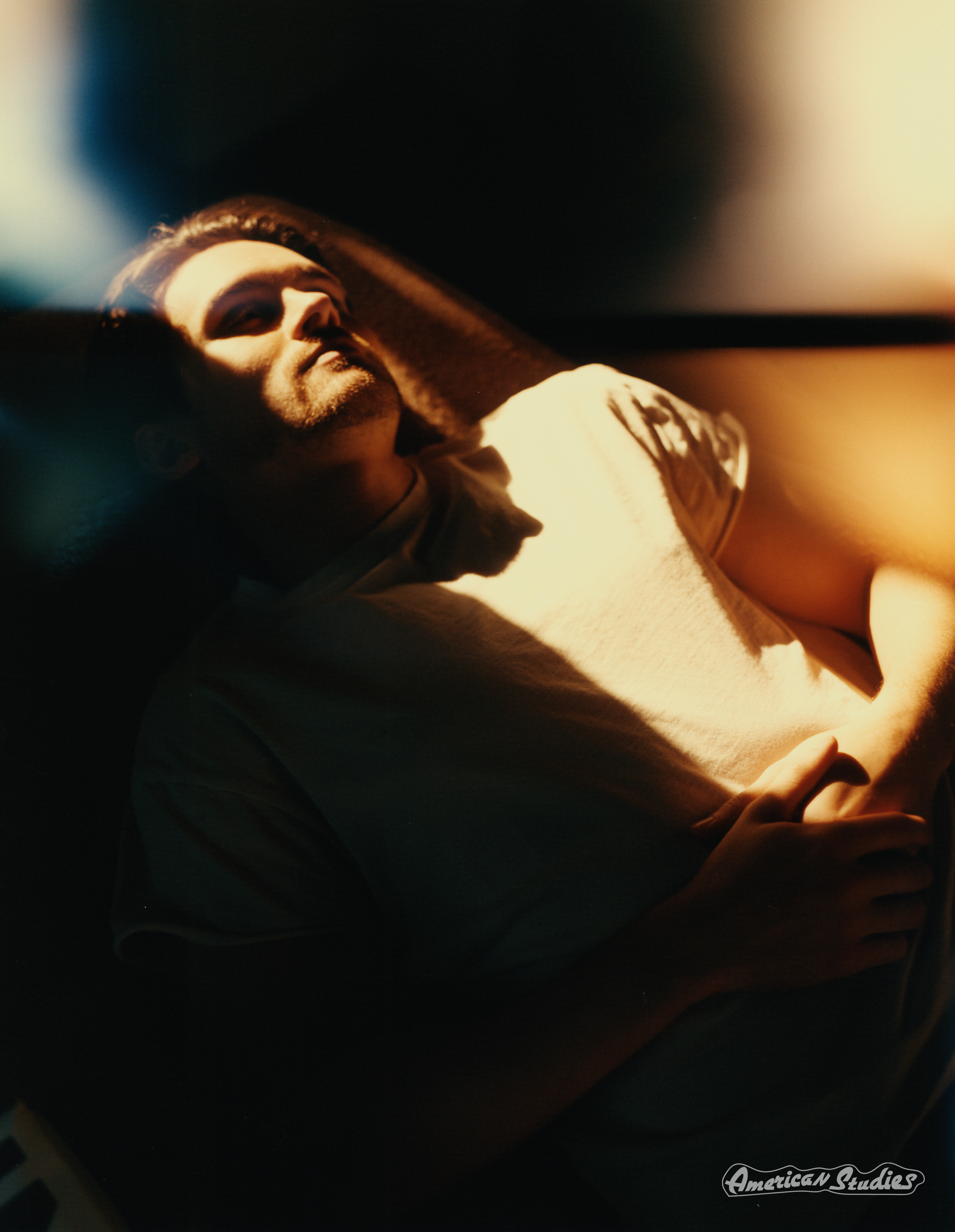
“I’m in this for the long game”
American Studies: Who have that extra sense of purpose behind each choice.
Michael Johnston: Exactly. I always think about Charlize Theron. I talk about her all the time because her career is incredible.
American Studies: Like in Monster.
Michael Johnston: Exactly. That’s what I want to do: take on something where I’m completely unrecognizable.
So I don’t think much has changed, but I do want to double down on working with directors who are open to collaboration with their actors and the entire team.
Obviously, at a certain point, a director has to put their foot down and say, “No, this is what we’re doing.” You need a strong vision. But when you open the process up and allow everyone to contribute, all of those different perspectives can enrich the project, as long as you’ve chosen the right people.
Curry brought in many of the people he had been making online videos with for years. And look at the sound, the lighting, the set design. These people were brilliant.
American Studies: It’s truly top-tier. My final question. I think it’s a nice full-circle moment: what was your audition for Obsession like? When you first received the material, how much did you know about the character? And how different was Bear by the time you finished making the film?
Michael Johnston: This was one of those beautiful projects where the character didn’t change very much.
I actually didn’t audition at first. I got the script, and then I had a Zoom meeting with Curry. It obviously went well. That’s the dream, right? When that happens.
American Studies: It becomes almost like a personality test.
Michael Johnston: Exactly. But I have to give full credit to the casting director, Skyler Zurn. From what I heard, the casting process for both Nikki and Bear was rigorous. They went through thousands of tapes. I think Skyler found me on a list because of an indie film I had done and sent Curry my headshot. He wasn’t completely sure at first, but then he watched my reel. We had a meeting and talked about what we loved about horror movies, the tone of this movie, and how we each understood the character. At one point, I said, “I have my lines here. Would you like me to read?” And he was like, “No need. You’re going to come in for the chemistry read.”
I read with a few different actresses. They were all great. But when I read with Inde, there was something extra special about our connection. I didn’t know whether I had gotten the part, but I knew I had crushed it.
American Studies: You knew it felt good.
Michael Johnston: Absolutely. As an actor, that happens sometimes. You walk away feeling good about the work. You did your job, and now you have to let it go.
But I had a hard time letting this one go because it felt so special.
American Studies: it just felt different?
Michael Johnston: It did. There’s actually a funny video on my Instagram of Inde and me talking about our chemistry, or almost our lack of chemistry, because we developed this very brother-sister dynamic. We couldn’t even get a handshake right. Then they called action, and suddenly we were in this incredibly intense scene together. She was in my face, I was getting spit on, and the whole thing was completely unhinged. But I was all in.
I’ll always remember that experience. It felt special. That’s the strange thing about acting. Sometimes you audition and test for a role over and over again. You wait, go back and forth, and then it doesn’t work out. And then sometimes you get a script, meet the director, and within a week, the role is yours. That’s the magic of it. There’s a quote I love: “What is for you, will not go by you.” I try to live by that. If I weren’t an actor, I’d probably have it tattooed somewhere. [Laughs.]
This interview has been edited and condensed
The Elle Actor Talks Life On The Other Side Of A Breakout Role.