Charlie Hall Never Misses Rec League
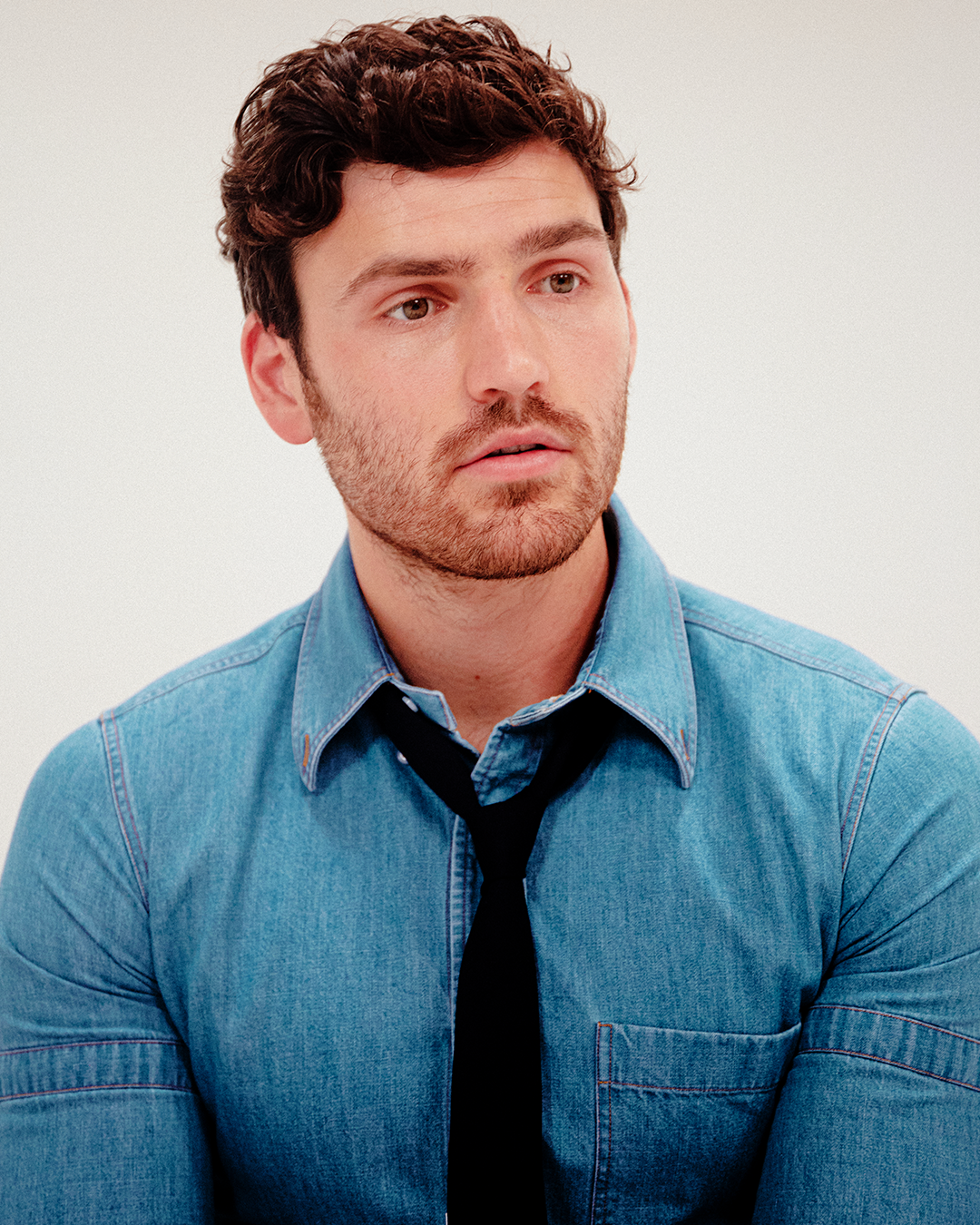
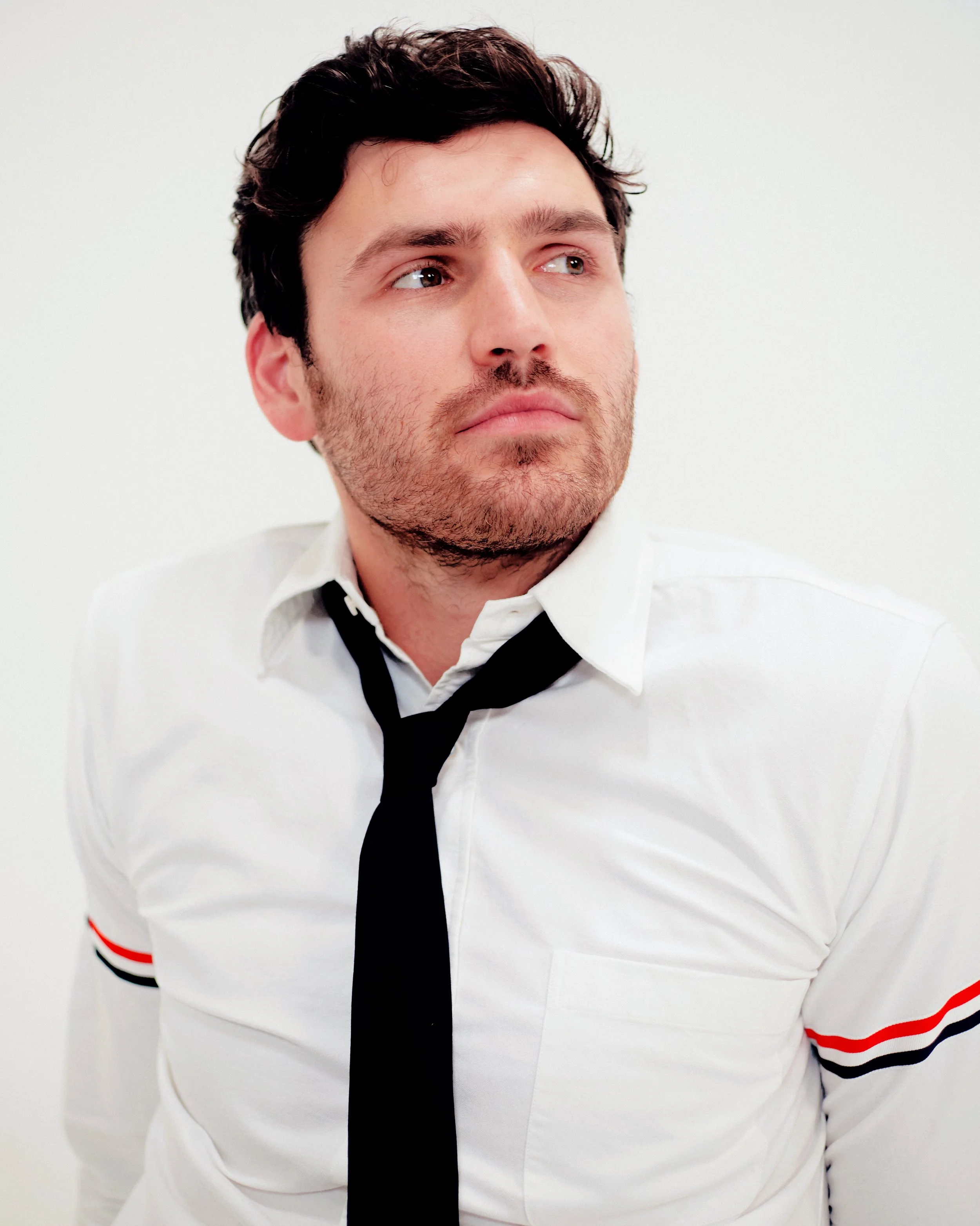
Full Look: Thom Browne
Charlie Hall talks basketball tunnel vision, family dinner bits, rec league devotion, and the perfectly calibrated McDonald’s Sprite.
Words & Photography by Dio Anthony, Styling by Thom Browne Grooming by Kindra Mann
Charlie Hall is serious...about the joke. He grew up in the version of Los Angeles that exists in movies: morning drives beside the ocean, Sunset Boulevard billboards overhead, film crews appearing around the corner. Entertainment was everywhere, but somehow it never became ordinary.
With relatives in the industry, visiting a set could be part of everyday life. Still, Hall remained a fan first—someone genuinely amazed that movies and television were being made at all, much less in the same city where he went to school and played basketball.
“I was used to it in one way,” he says, “but I was never bored or jaded by it.”
His childhood was split between the Pacific Palisades, Crossroads School in Santa Monica, and basketball gyms scattered across Southern California. The ocean was less a destination than a constant presence: something he saw every morning on the way to school. Basketball, meanwhile, pushed him beyond the boundaries of the Westside, taking him from Santa Monica to Orange County and introducing him to a broader version of the city.
When Hall talks about the Palisades now, that idyllic memory is complicated by loss. His childhood home was destroyed in the Los Angeles fires.
“It almost feels like the death of a living, breathing thing,” he says. “It’s just tragic.”
The landmarks that remain in his memory are distinctly Angeleno: the water, the drive to school, Sunset Boulevard, and its ever-changing advertisements. Years later, when Hall appeared on one of those same billboards, it meant more than he expected.
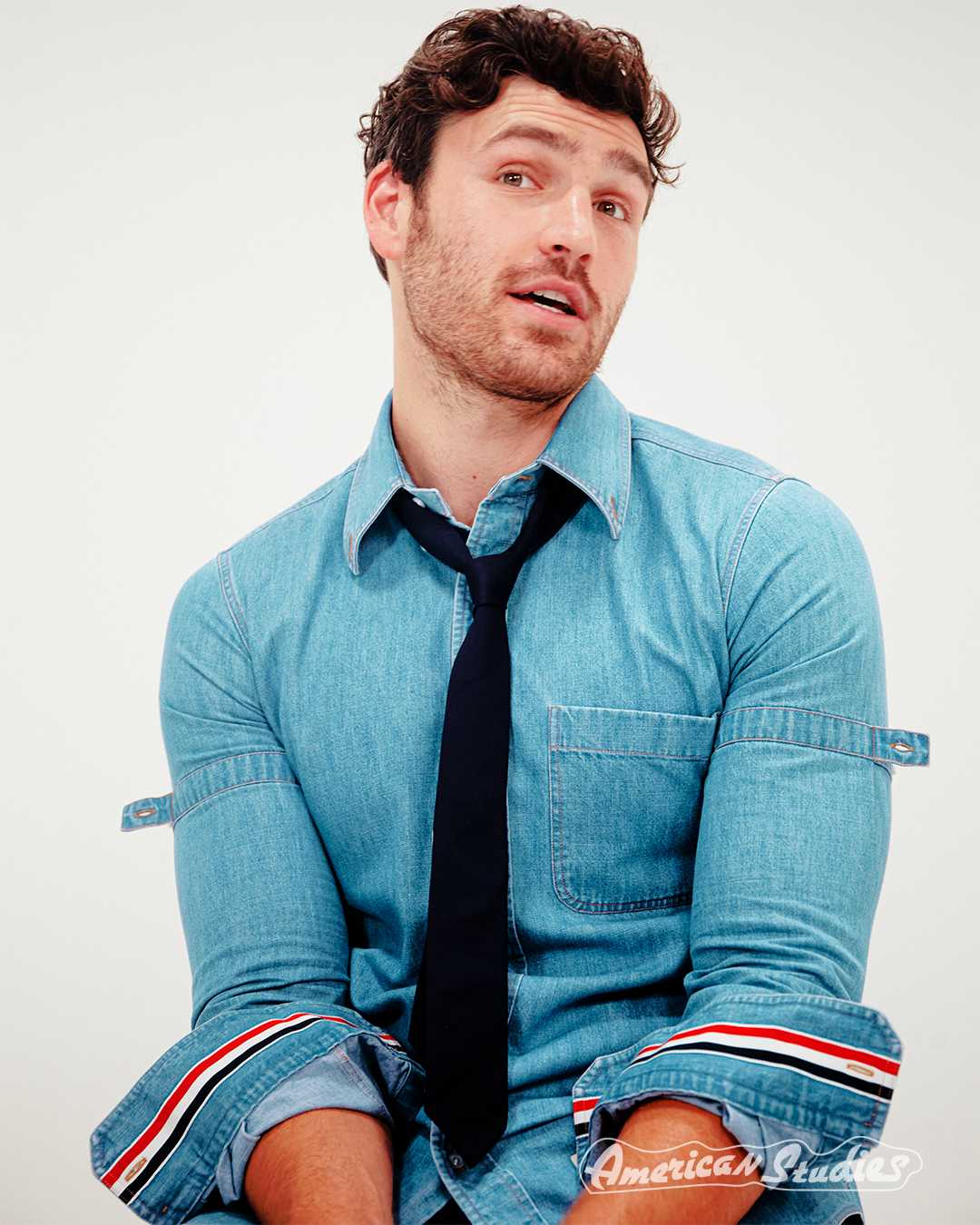
Full Look: Thom Browne
“I’m serious about the pursuit of a laugh and the construction of a joke.”
“I’m not usually someone who cares about that kind of thing,” he says. “But I had grown up driving past them every day, so it felt really special.”
He pauses, then delivers the simplest possible explanation.
“I love LA. I love it.”
For most of his early life, Hall did not imagine himself becoming a performer. He was too focused on basketball.
“I had a little bit of sports tunnel vision,” he says.
He had always been funny—or, at least, always trying to be. Around his friends, Hall was the person doing bits, chasing a reaction and attempting, perhaps past the point of reason, to make everyone laugh. But he did not initially understand that instinct as performance.
“I really just thought that was my personality and the way I hung out with people.”
It was not until his senior year at Northwestern that those impulses began to look like the beginning of a career. Hall and his friend Jack made a web series called Sorry Charlie. They did not want to pay someone else to appear in it, so Hall put himself in front of the camera.
“And I loved it,” he says. “I remember thinking, ‘Wow, this is really fun.’”
A role on Veep followed, giving him another chance to perform professionally. For a while, acting remained something he might pursue alongside sports. Eventually, however, Hall was forced to confront a fairly substantial obstacle to his NBA ambitions.
“I realized, ‘Okay, I’m not going to make the NBA,’” he says. “If only I were seven-foot-five, way faster, and could jump higher.”
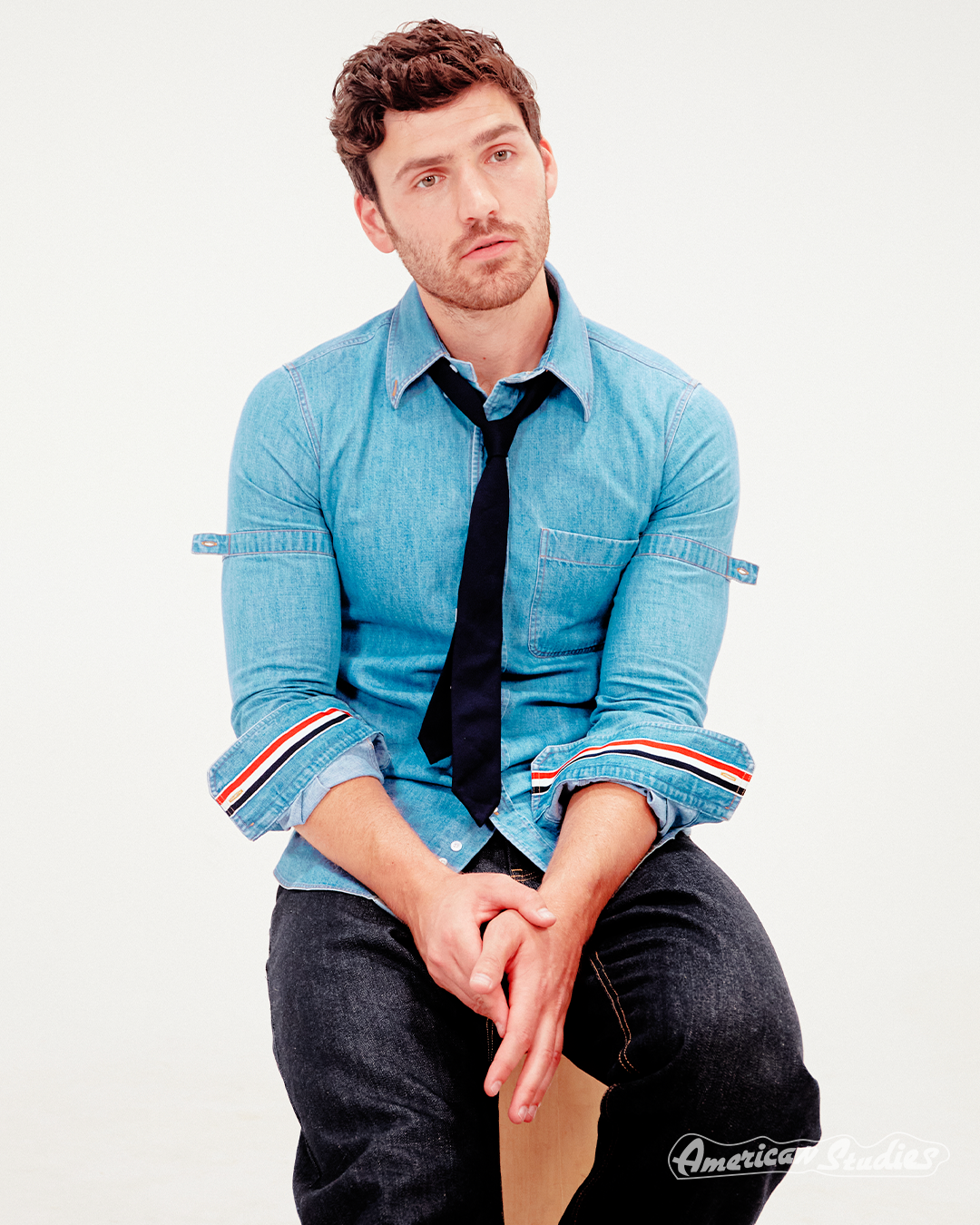
Full Look: Thom Browne
American Studies: Is that what it takes?
Charlie Hall: It felt like it for me. At my skill level, I would’ve needed to be seven-foot-five. I’m good, but I’m not that good.
Once he began auditioning, the connection became obvious. Trying to make someone in an audition room laugh was not fundamentally different from performing for his friends at home. The setting had changed; the pursuit had not.
Comedy, it turned out, had been part of Hall’s education long before he recognized it as such.
“Playing team sports teaches you to think about the broader goal: How can I make everyone around me better?”
His older brother Henry was his earliest influence, though “influence” may be too polite a word for how Hall describes it.
“I’m a carbon copy of him,” he says. “I steal all of his humor and even his voice.”
People regularly tell the brothers that they sound alike over the phone. Hall calls Henry his “comedic North Star” and credits much of his own sensibility to growing up around him. More broadly, humor was the default language of the Hall household.
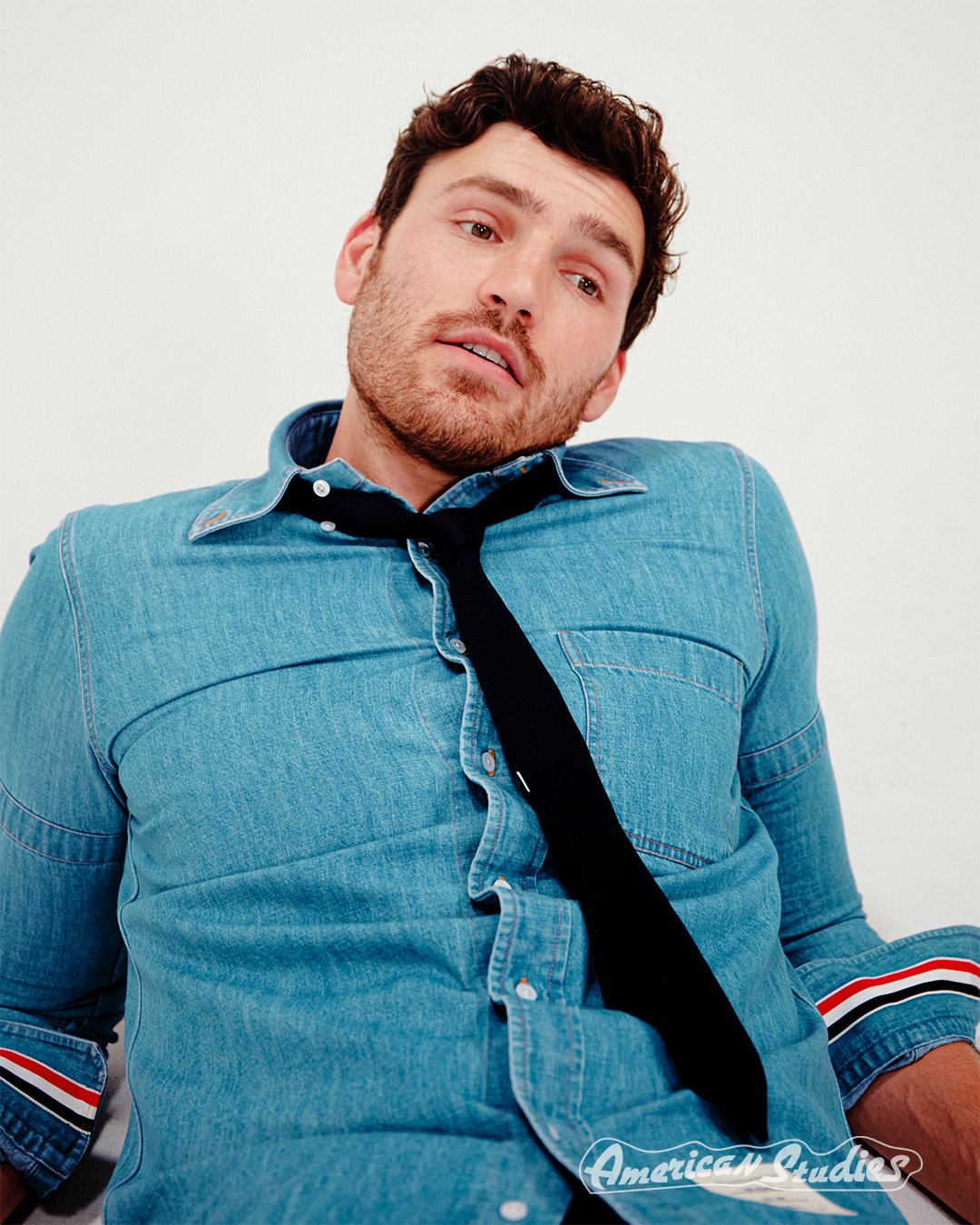
Full Look: Thom Browne
“My family sort of takes turns being the funny one,” he says, “with my brother in the driver’s seat most of the time.”
At dinner, everyone was expected to participate. A joke was rarely allowed to sit untouched. If Hall began a bit, someone else would build on it. The family instinctively understood the rules of improvisation before anyone needed to call them that.
“If I tried to do a bit with someone outside my family and they didn’t reciprocate or ‘yes, and’ it, I didn’t understand,” he says. “Doing bits, laughing incredibly hard, or trying to make each other laugh was part of every family dinner I’ve ever had.”
Hall may have traded his ambitions as a professional athlete for acting, but basketball never entirely left the equation. He believes his sports background informs nearly everything about the way he works.
On the most practical level, athletics taught him to prepare past the point of comfort.
“When it’s game day and you get a shot from the corner, you’d better have practiced it hundreds of times so that you feel confident you can make it,” he says.
He approaches acting in much the same way. Whatever emotional or creative work a scene requires, Hall wants to have done it before arriving on set. Preparation creates the freedom to respond in the moment.
Team sports also trained him to think beyond his own performance. On an ensemble project, the objective is not to dominate every scene. It is to make the entire thing work.
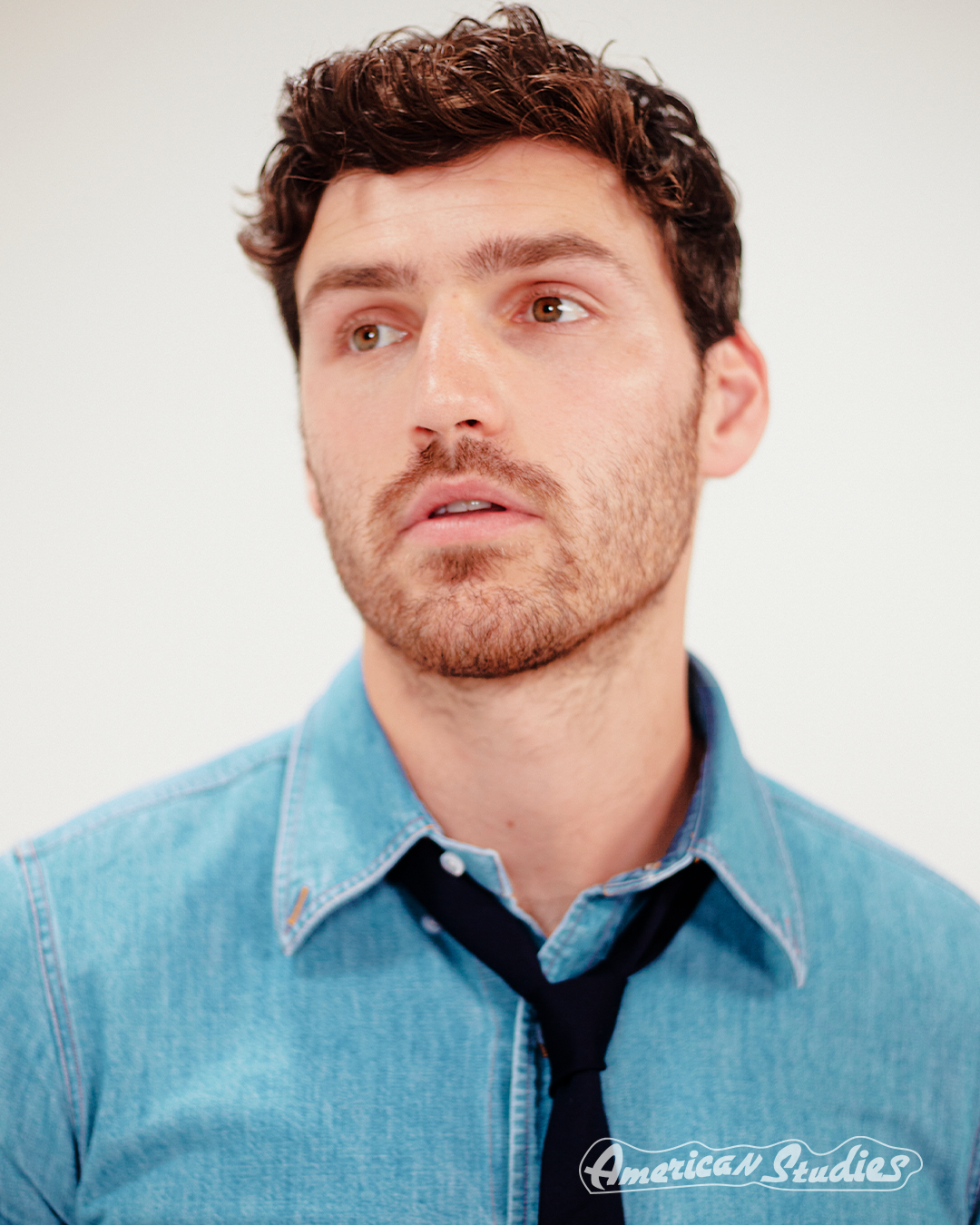
Full Look: Thom Browne
“Especially in an ensemble like The White Lotus, it’s less about, ‘How do I score?’ and more about, ‘How can I make everyone around me better? How can we make this thing the best it can be?’”
Basketball also affects the way Hall understands his physical presence. He loves being tall, largely because it served him on the court, but he is conscious that his height can create an impression before he speaks.
“The second I open my mouth, no one is intimidated by me anymore,” he says, “because I’m pretty soft as a guy.”
Still, he sometimes catches himself shrinking his body or minimizing the amount of space he occupies. It is an instinct he questions, but one he understands.
“I know people may have a certain impression of me or my presence,” he says, “so I think about how to mitigate that in an interaction.”
Hall is now writing the project that perhaps most completely combines his interests: an ensemble comedy about adult men playing recreational basketball.

Full Look: Thom Browne
The series, which he is developing with Alec Berg and Amy Solomon, uses a rec league as the backdrop for a story about male friendship—the rituals, rivalries, insecurities, and strange emotional negotiations that emerge when a group of men gathers to play a game they are taking both too seriously and not seriously enough.
“That’s where everything male comes out,” Hall says.
His own week is organized around his league. When he is home, he rarely misses a game. Even the opportunity to travel to Europe for work came with one significant drawback.
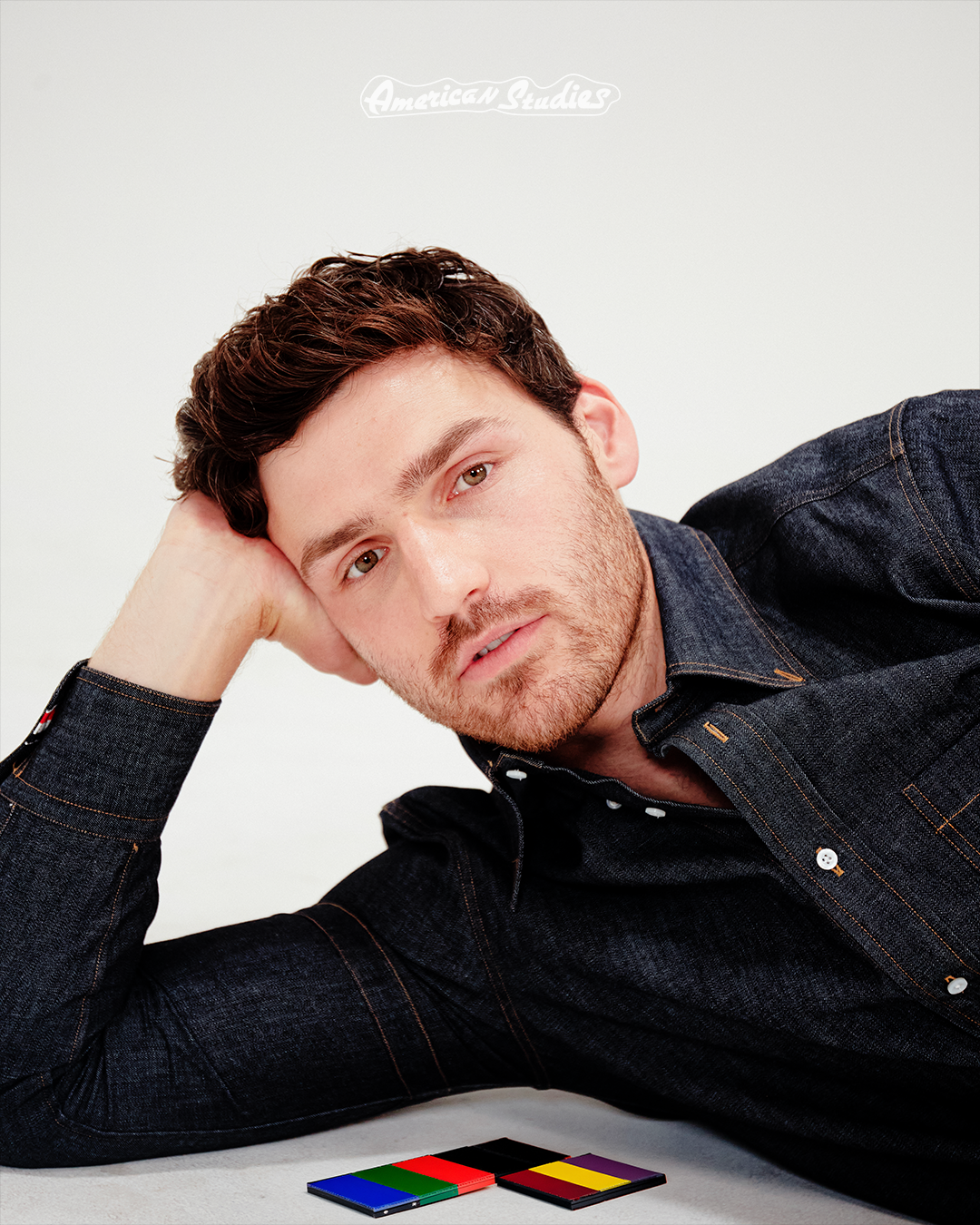
Full Look: Thom Browne
“The only negative thought I had was, ‘Oh my God, I’m going to miss so many rec league games.’”
Writing from that world feels natural because Hall knows its characters, rhythms, and tiny indignities intimately. He wants the show to carry some of the loose absurdity of Workaholics, another comedy he returned to repeatedly.
“A little more serious,” he clarifies, “but with that same silliness.”
“I’m serious about comedy. And I’m also very serious about LeBron James.”
That balance—real emotional stakes inside a profoundly ridiculous setting—makes sense for Hall. His comedy is rarely built around presenting himself as the smartest or most dominant person in the room. It is warmer than that, grounded in observation and the pleasure of recognizing how strange people become when they are together.
Hall says maintaining friendships with people outside the entertainment industry helps preserve that perspective. He sends scripts to friends who do not work in traditional creative fields and watches movies with them to see what they notice.
“When you get into an echo chamber with too many creatives,” he says, “you can lose sight of who you’re making things for.”
Growing up, Hall’s primary comfort movie was Anchorman. At 16 or 17, he estimates that he could have recited nearly the entire script.
“I’ve seen it way more than 50 times,” he says. “There was a period when I watched it nearly every week.”
More recently, his obsessive tendencies have shifted toward books. Hall has been making his way through the Red Risingseries, an experience made slightly novel by the fact that he usually considers himself more of a television person.
“It’s been fun to be rushing home to read for a change.”

He has also been thinking about elephant seals. According to something Hall encountered on TikTok, baby elephant seals may be getting faster because great white sharks prey on them when they first enter the water, leaving the fastest to survive and reproduce.
“It’s basically natural selection happening in real time,” he explains, before immediately issuing a disclaimer. “I have no idea if that’s actually true, by the way. I learned it on TikTok.”
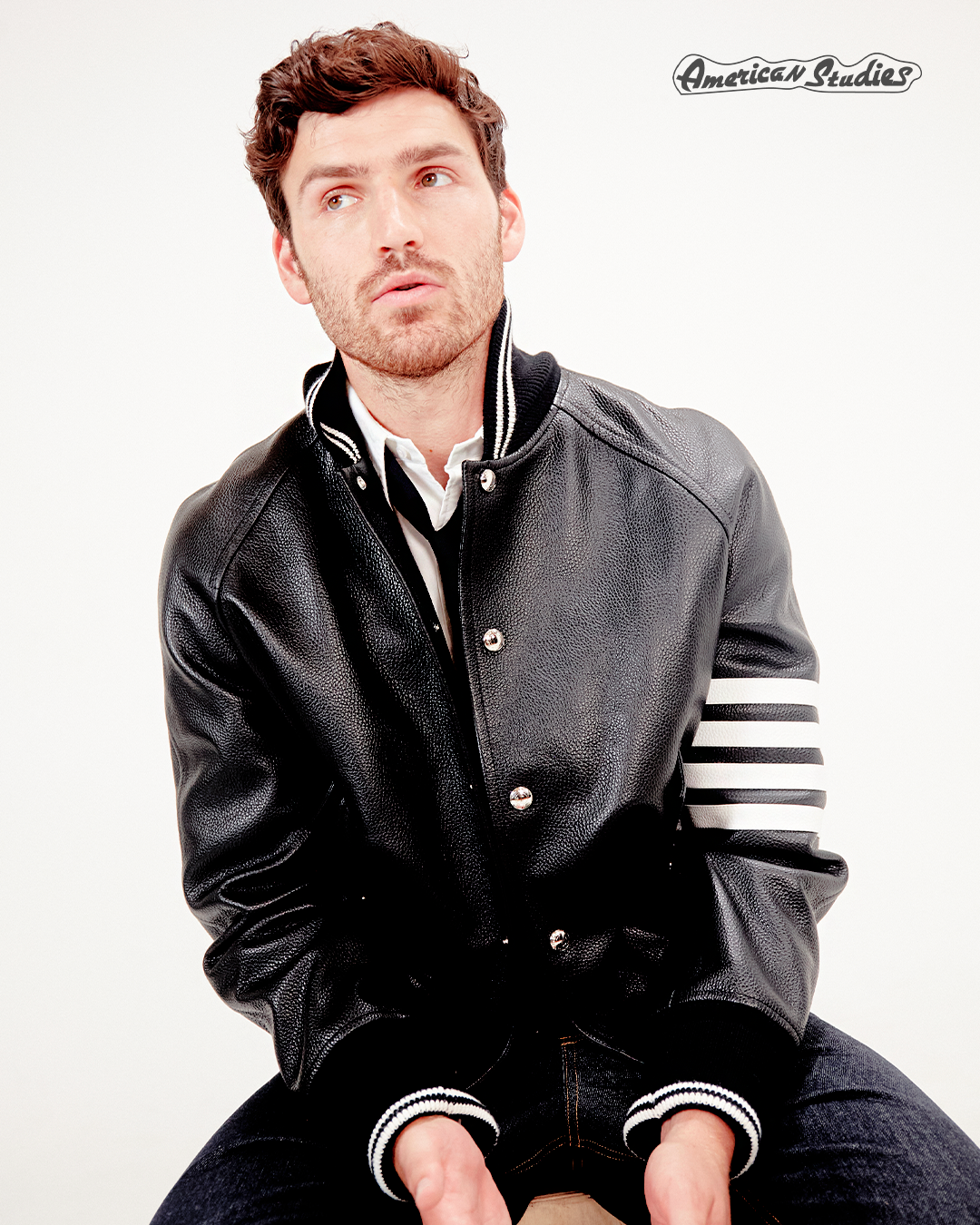
Full Look: Thom Browne
The app has also exposed him to the dead internet theory: the idea that much of what appears to be human activity online is actually automated—bots generating content, responding to other bots and creating an imitation of conversation.
“The internet is probably way more bot-heavy than we assume,” he says. “It’s not as human or real as it seems.”
For someone who worries about losing touch with the people art is actually made for, the theory feels appropriately unsettling. Hall is most drawn to the opposite quality in people: genuine curiosity.
“A curious person is someone I want to have dinner with,” he says, “because they tend to have the best stories and ask the best questions.”
Curiosity, he believes, usually arrives alongside empathy. He likes people with interests that seem initially incompatible—the marine biologist who also happens to juggle, for example. The stranger the combination, the better.
“Someone who’s curious, empathetic, and interested in a lot of things.”
There is, finally, the soda.
Hall is not merely someone who enjoys it casually. He belongs to a group chat called “Soda,” where members send each other photographs of interesting drinks they have encountered or consumed.
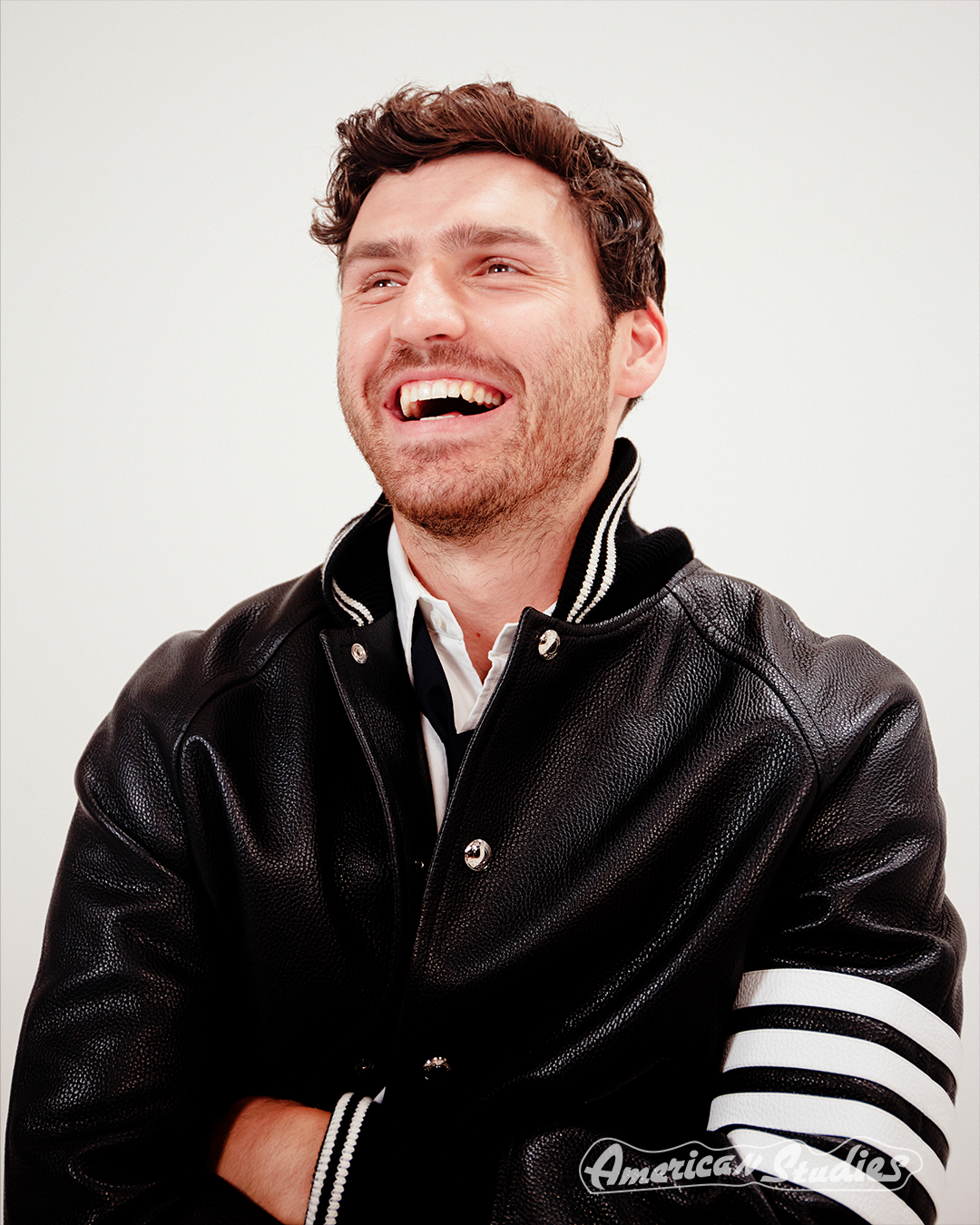
Full Look: Thom Browne
“That’s where I’m at,” he says. “I’m a connoisseur.”
Asked to select one final soda—the last sip before someone hypothetically pulls the plug on his deathbed—Hall answers with surprising certainty.
“A McDonald’s Sprite.”
The restaurant’s fountain machines, he explains, are unusually “dialed in.” A classic Sprite is his all-time favorite, followed closely by root beer. Shirley Temples also occupy a foundational place in his personal soda mythology.
“I think a Shirley Temple may have been the first soda I ever had as a kid,” he says. “I probably went to a restaurant with my parents, and they asked, ‘Have you ever had a Shirley Temple?’”
Hall considers the consequences of that decision.
“Little did they know they were creating an addict.”
Wait, is he doing a bit?